Author Archives: firetreeadmin

Rangers Report | September 2026

Charcoal hunts and rhino stunts

Where last month’s landscape was shaped by controlled burns and charred earth, this month has brought a remarkable transformation. Fresh green shoots are emerging through the softened soil, while the landscape is steadily filling with layers of vibrant green. Across the reserve, trees are coming into leaf and bloom, signalling the arrival of spring and the beginning of another season of renewed growth. Let it be known and shared far and wide that September has been a truly spectacular month at Umzolozolo Safari Lodge.

Before the first week of Spring was allowed to rest in our memory banks, the bush telegraph was abuzz with news and views. Umzolozolo celebrated its 20th anniversary with a festive weekend of shared memories, great company and much laughter. Stories from deep within the two decades of its history filled the air as the fire crackled and the voices shared. To commemorate the occasion, our owners were treated to their very first leopard sighting on Nambiti. It wasn’t brief, and it wasn’t distant. The big tom was lying within 8m of the Umzolozolo signboard and it was as if he knew the moment was one that needed to be enjoyed.

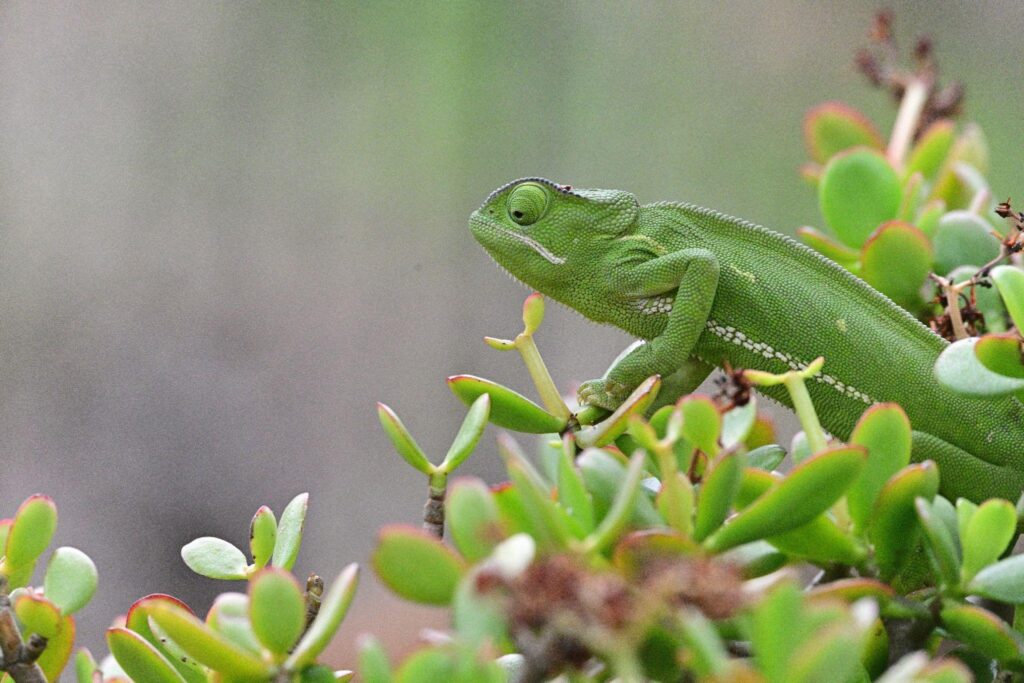
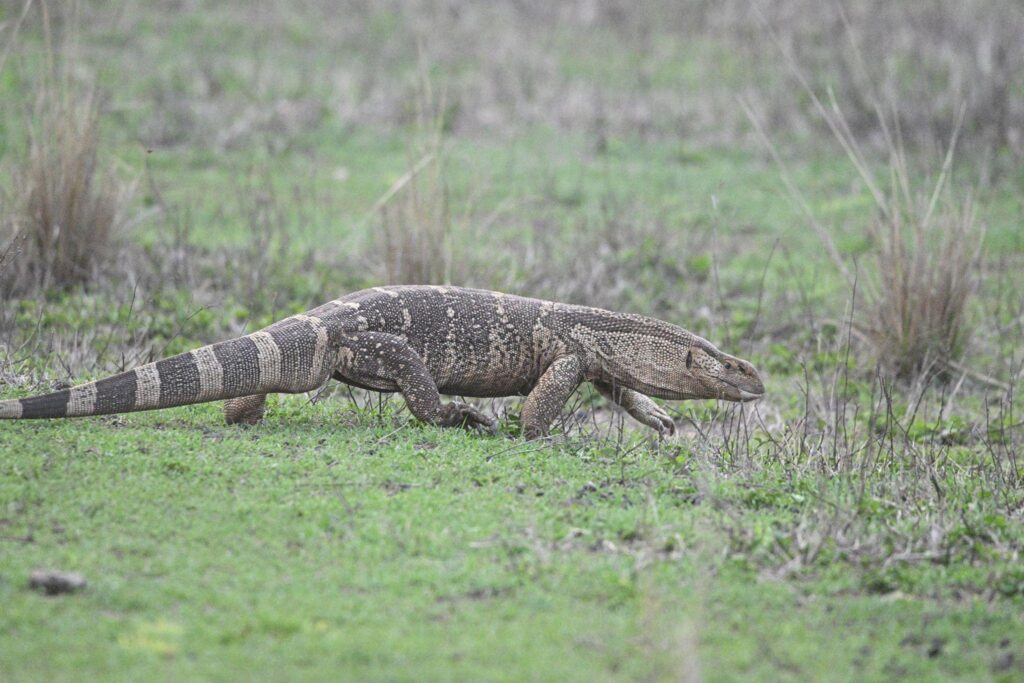
Traditionally, I begin the report with news of the big cats or the infamous characters that we all know so well. This time around, I am going to tell you about some of the more unusual creatures we have spotted while out on game drive this month. On a morning drive, while heading back from a coffee stop through Den Valley, one of our guests stopped me and pointed out a Southern African python cruising down the rocks. The reptile was easily over 3m long! In the two weeks that followed, Promise spotted a puff adder and I saw a juvenile Southern African python swimming across Woodlands Dam. We also welcomed back a couple of Boomslang at the lodge. Snakes were not the only reptiles that came out to enjoy the warming temperatures; Water Monitor Lizard sightings have been on the increase, I got footage of a Rock Monitor Lizard crossing one of the open patches near Gideon’s Memorial, Flap-necked Chameleons have spiced up our sunset safaris and the Southern Tree Agamas are sunbathing on rocky surfaces around the lodge.
The reserve is looking particularly magnificent at this time of year. As you take in the landscape, the contrasts are striking: expanses of blackened earth giving way to brilliant green shoots, set against the rich, rusty-red tones of the dolerite boulders. Many of the herbivores are drawn to the delicious bounty of fresh vegetation and where there is an increase in primary consumers, you had better believe there will be an increase in predators as well.

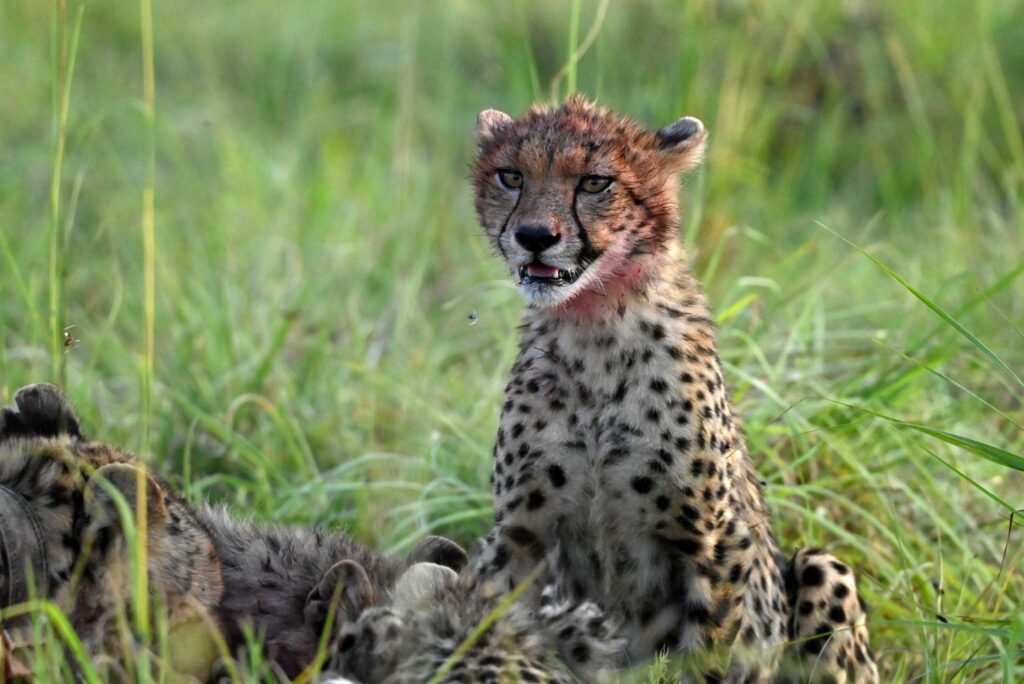
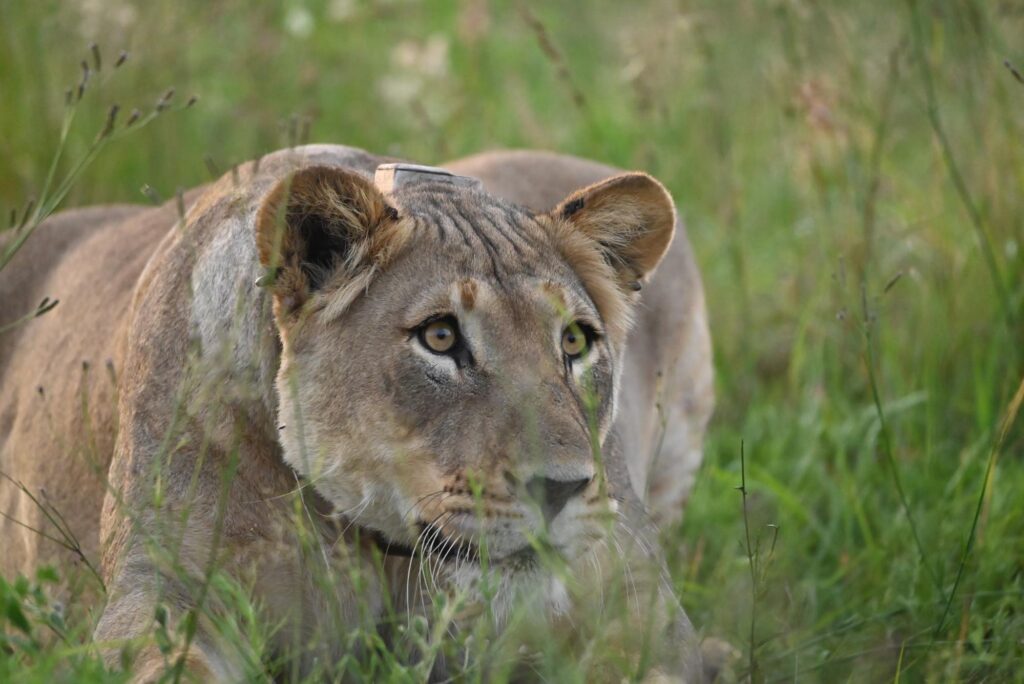
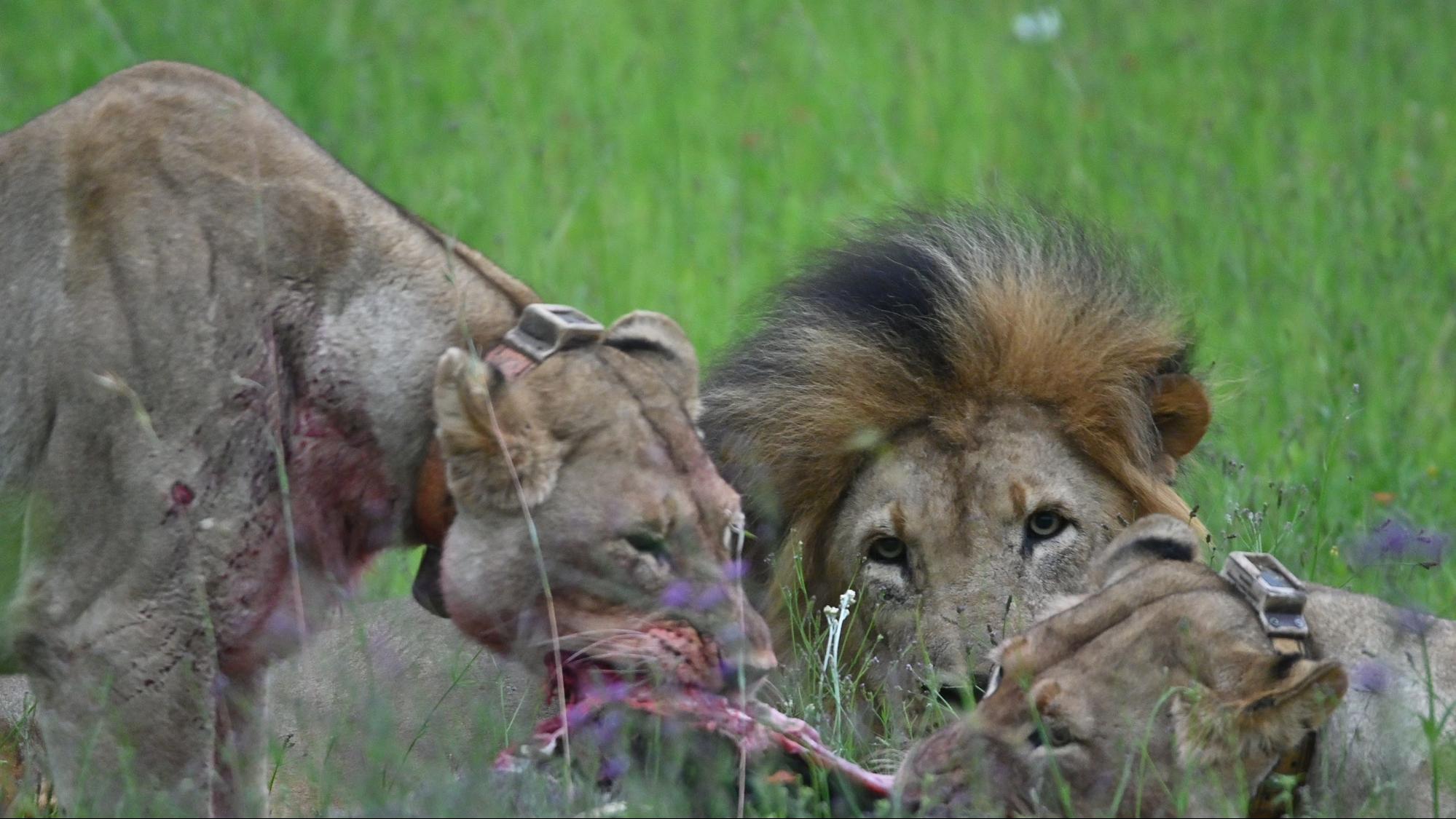
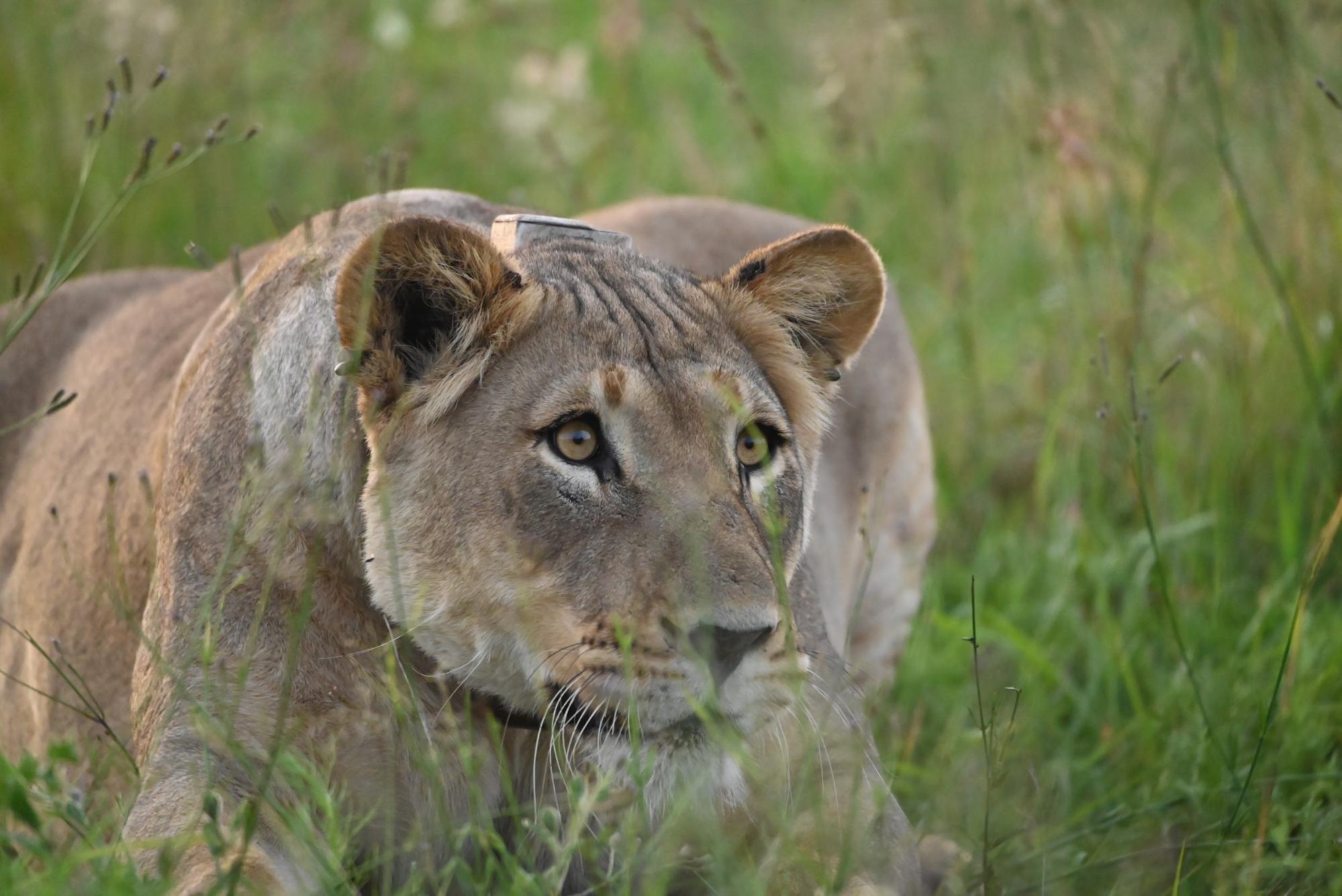
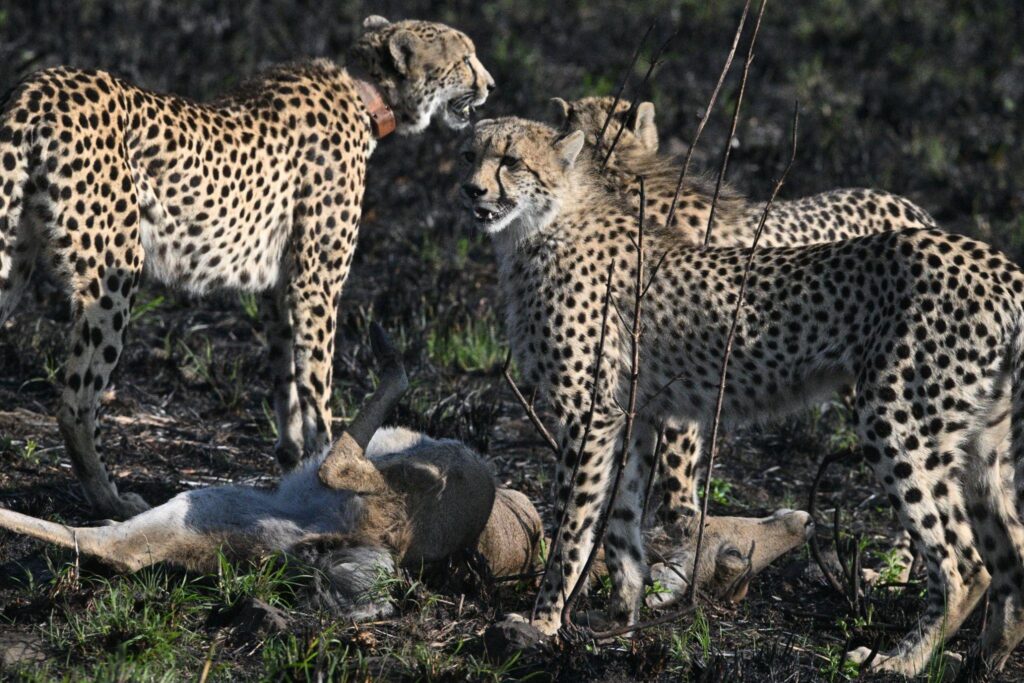
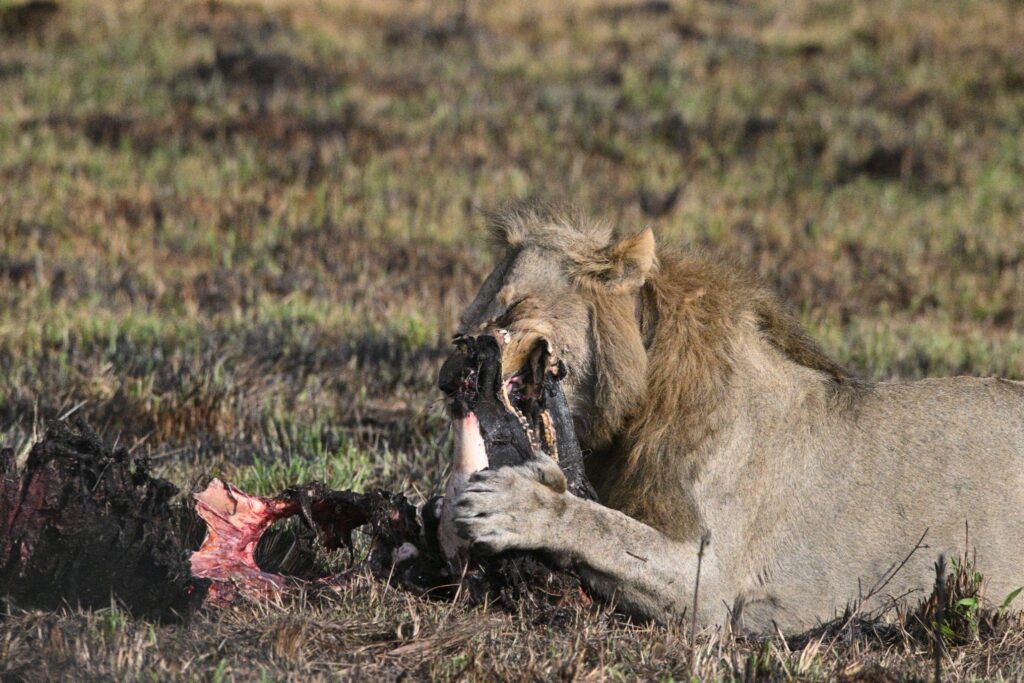
Two of the more memorable moments in these open patches involved an unsuspecting reedbuck and an unfortunate zebra. Myself and Siya were watching Malica and her two cubs towards the end of a morning drive. The road we were on was incredibly rocky and while I was sitting with the cubs, Siya looped around to try and get a visual of the mom who had moved down into the gully. In the blink of any eye, the cubs got mobile and seconds later we were sitting behind Links Dam watching them feast on a reedbuck ewe that Malica had taken down. None of us saw the kill, it happened that quickly, but it was awesome to watch the cubs figure out how to open the carcass to start feeding. They are nearing the time in their lives where mom will abandon them and they will have to fend for themselves. In light of this next chapter, the cubs have been fitted with their own tracking collars. A milestone moment in their journey. The unfortunate zebra fell victim to the two new male lions and the southern lionesses. The hunt took place in the late afternoon but the big cats were still feasting the following morning. With the area so open, the visuals were graphic and raw. It was a photographer’s dream in terms of proximity and colour. Interestingly enough, these four lions followed up the zebra meal with a warthog and then a waterbuck over the next two days.
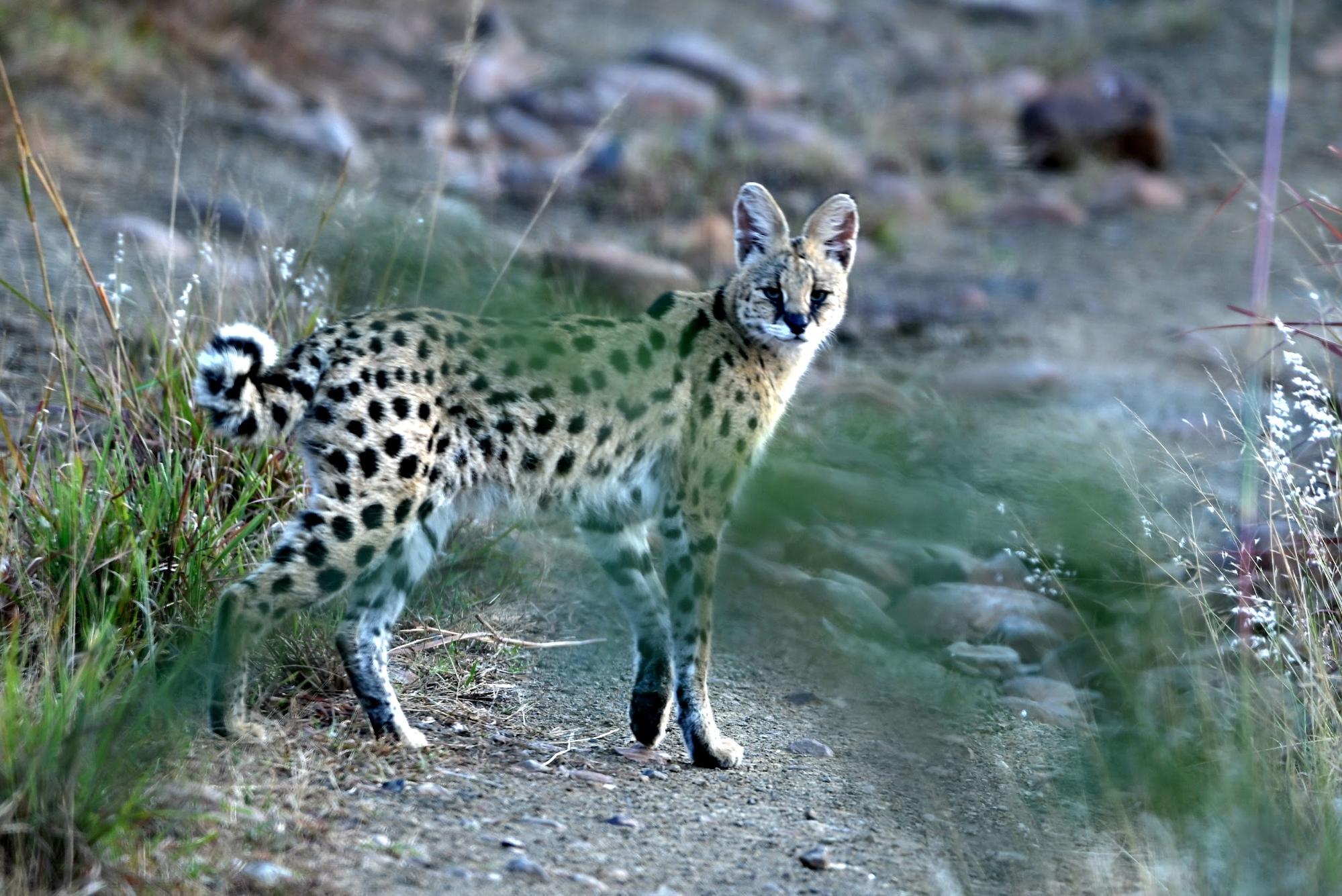
Unique sightings have undoubtedly been a feature for this month. My guests and I watched a Reed Cormorant hunt and devour a frog one morning at Links Dam. On another occasion, this time at Bass Dam, we watched as a toad defied death by inflating itself so much that the Water Monitor Lizard wasn’t able to swallow it! The interesting sightings haven’t only happened during daylight hours. On an afternoon game drive, we turned around to rescue a guest’s cap before continuing back to the lodge by taking the scenic route. This route took us along Spruit Road where we believe we encountered a tree full of glow worms! As if that wasn’t crazy enough, when we turned up towards the lodge we found a male leopard standing off to the side of the road. It walked off into the thickets as we approached but then popped up a few more times to drink from a puddle in the road before eventually lying down in the grass. We actually moved off to allow other guides to get a view! On a separate evening, we were driving back after sundowners and we spotted a caracal. The smaller cat was sitting in the grass staring back at us before it disappeared into the darkness in search of food. Sightings of caracal are rare, and so when we encountered another one on the following night, it was clear that September was feeling generous! The smaller cats featured a few more times but this time it was the servals that stole the limelight. At least two females have litters of kittens. One female in the north has two kittens while the one in the south appears to just have one. Both mothers have been spotted walking in the road or hunting rodents just off to the side of the road. They are incredibly successful hunters and gobble their prey within seconds!

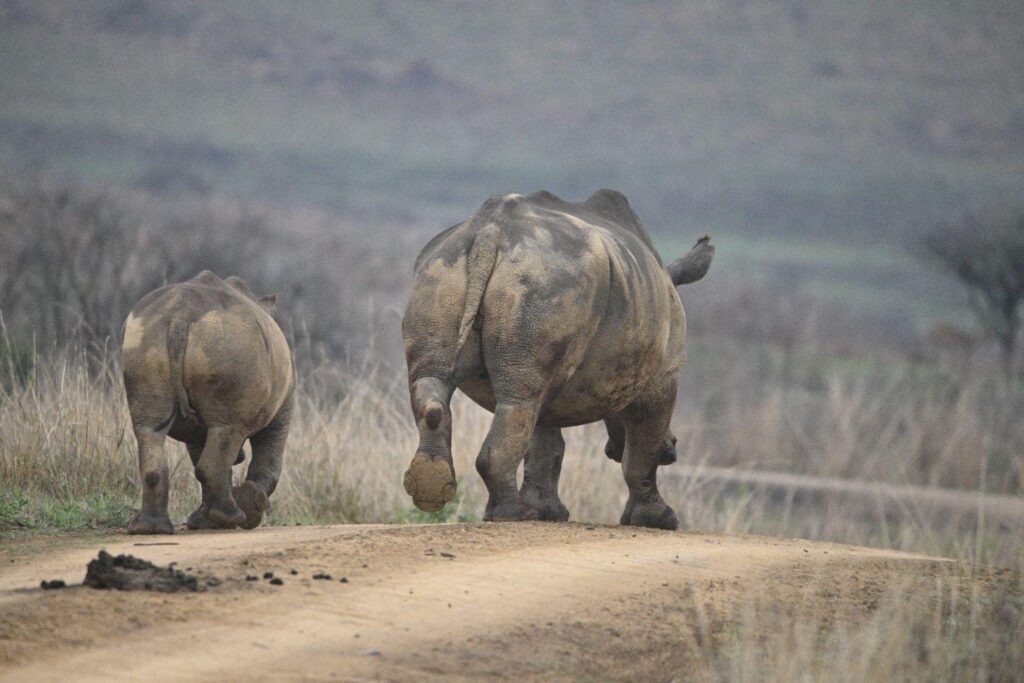
Our Square-lipped Rhinos have also been very entertaining. On a morning drive we came across a mother and a calf that were accompanied by a large bull. The cow was not in the least bit interested in the bull and she made it quite clear. A few minutes later, another mature bull arrived on the scene and this is when things heated up. There was posturing and a bit of shoving, however, it was the audio that really had all of us quite intrigued. One of the bulls moaned or whined at the other one for the duration of the standoff. It was a sound that none of us will ever forget! The young calves that are being weaned off of their mothers’ milk have also expressed some interesting sounds. A high-pitched, plaintive squeal can be heard each time the calf begs the mother for some milk. With their little horns starting to grow longer, you can imagine the discomfort when they move in to suckle from a teat. Every encounter is an opportunity to learn more about the dynamics, but also to fully embrace the moments and spend time observing their behaviour.
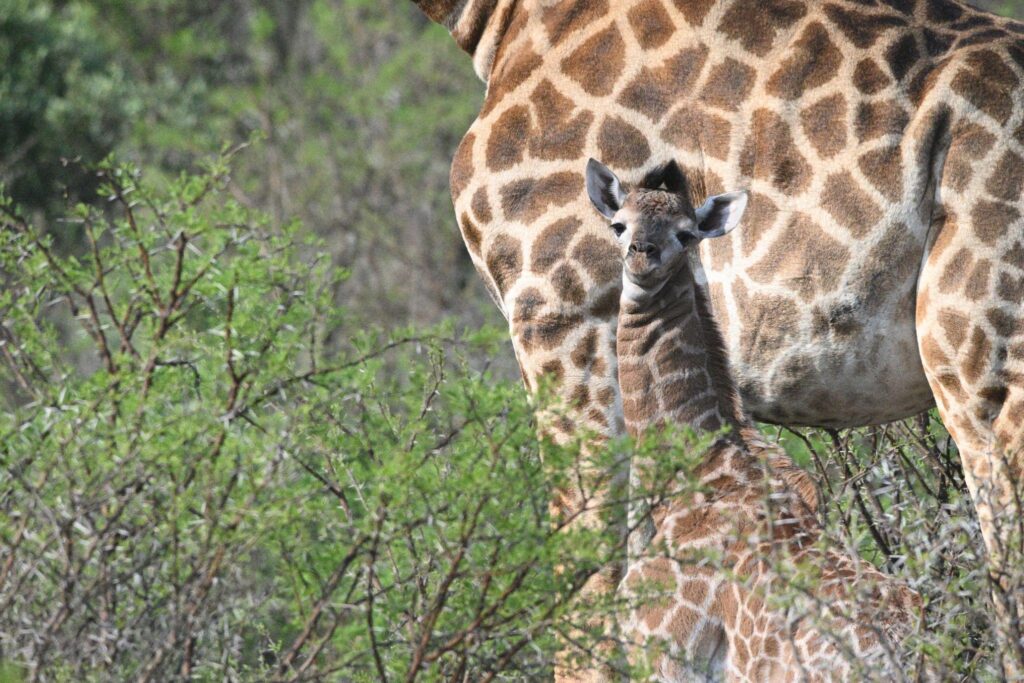
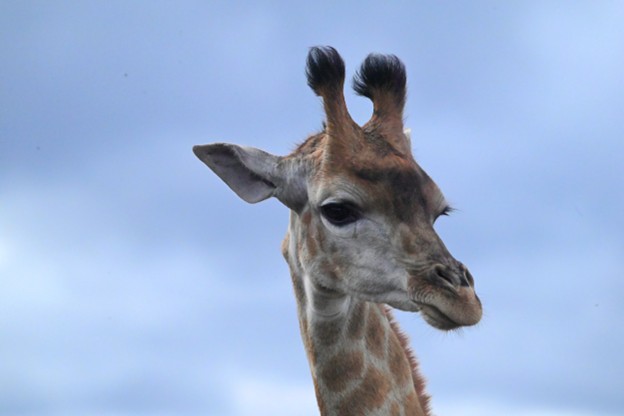
One of the highlights from September is most certainly the newborn giraffe calf. Field Guide Mark and I headed out for an afternoon game drive and happened to choose the same route as we left the lodge. To our surprise and delight we stumbled upon a newborn giraffe. We knew that we must have just missed the birth because some of the afterbirth was still visible. While we were there, we watched the calf take its first steps and have its first suckle. These are the moments that make each game drive special. You just never know what you will find around the next corner!

As the colours of Spring begin to pop up all over the place, we are starting to see and hear many of the beautiful feathered characters that call Nambiti home. The Long-tailed Widowbirds and Pin-tailed Whydahs are wearing their eclipse plumage and tail feathers are beginning to lengthen as they transition into their breeding outfit. The call of the Red-chested Cuckoo is ringing out across the valleys as they return to seek out host species for the breeding season. The low booming call of the Common Quail can be heard at dusk if you listen carefully. Then, of course, one of the most loved species that can be heard around the lodge is the African Paradise Flycatcher that is starting to set up nesting sites for the season. We have also identified and logged a few interesting species this month, most noticeably a Black-chested Snake Eagle, a small flock of Swee Waxbills, a Black-winged Lapwing and a pair of Senegal Lapwings!

Our morning game drives are now departing at 05:30 and the sunset drives are still beginning at 15:30. Please don’t forget to bring your own bottles with you to help us reduce plastic and paper waste.

See you soon for your next safari adventure! Stay wild!

Head Guide Noleen Turner

Rangers Report | August 2026

Big-5 flexes and Smokey horizons

The month of August has been dominated by flames and smoke. The reserve conducted extensive controlled veld burns across the central to eastern regions. These annual block burns are incredibly important to the vegetative health of the reserve and the progression stages of grasses. Within days, we have seen new green shoots coming through and these are attracting selective grazers and interesting birds into these spaces. With rain on its way soon, our reserve is sure to transform into a green wonderland before you know it.

It’s no surprise to anyone that the weather has been a little peculiar this year. In the second
week of the month our country experienced extremely cold conditions across eight of the nine provinces and we were wondering if any snow would end up falling on the reserve. It seemed to be snowing all around us, and while conditions on Nambiti were icy and wet, the snow stayed away. It was really awesome to look across at the Drakensberg mountains and see them covered in white snow for a few days. It is also interesting to mention that we haven’t really experienced the blustery winds associated with August, but they may just be delayed a few weeks. You never know.

Our nation celebrated Women’s Day on the 9th of August, but it was the male lions that stole the show on game drive. We responded to an established lion sighting where the two new male lions had been found and it was reported that there were some intense vocalisations echoing across the plains in the northeast. As we made our way into the area, we happened upon our dominant male. He was highly mobile, visibly distressed and physical injuries were showing on his body. Coming from east of his location were the younger males, and they were on a serious mission to catch up with the king. We stayed to observe as much as we could before making space for other guides to come in and share in the experience, but after stopping for coffee at the waterfall the radio updates confirmed that they were still hot on his heels. I asked for another standby, but by the time we got to their location the big male had made his escape and the warming temperatures had forced the younger males into the shade for the rest of the morning. Two days later, the new males were called in on the road below our lodge. They had taken down a kudu for breakfast but were now more interested in territorial activities and the southern lionesses who were in the vicinity. At this time we observed that the lionesses were not in the least interested in the younger lions and actually made every effort to avoid them. Then, just two weeks later, the southern lionesses and the coalition of new males were found together on Ziggy north corner. They were out in the open and it was clear that the moves had been made and the transfer of power was firmly underway.

The Big-5 flexes continued into the third week. I was exploring some of the burnt sections of the reserve one afternoon when a leopard was called in at the bottom of Den Road. On this specific afternoon, I turned to my guests and filled them in on what I had heard over the radio. The decision was unanimous, we were throwing caution to the wind and finding the fastest route to the rosetted pot of gold. Once we were within range I called for a standby and within 30 minutes we were sitting with a male leopard. The visuals were not perfect as he was hidden behind a guarrie bush on a rocky ledge, but the experience was very rewarding! All three of the Umzolozolo guides out on drive responded to the sighting and it was the talk of the town when we returned to the lodge in the evening!

Our elephant herd has been quite mobile between the central and southern regions. They, like other herbivores, have been drawn into the recently burnt areas to investigate the ash and lingering scents as they assess what has changed. They may even be seeking out charcoal, which can provide minerals and help neutralise natural toxins from some of the plants they eat. It is an impressive sight to watch the grey giants moving swiftly through the ash, and it offers excellent photographic opportunities. Our newest member of the herd is now eight months old and full of sass. He is a popular tourist attraction and his curious nature and feisty character make for great entertainment!

In June this year, guests at Umzolozolo participated in a black rhino dehorning event. The bull that we dehorned featured in one of the most amazing black rhino sightings we have ever experienced on the reserve. More in terms of quality time and opportunity for sharing knowledge about these infamous creatures than anything extraordinary. As many of our guests know, we don’t call any sightings of rhinos in on the radio, so if you don’t drive in the right areas at the exact right time, you usually miss them. As luck would have it, this sighting was a busy one because he popped up close to the elephant herd. Guides that were on standby for the elephants had the privilege of sitting with the black rhino! August was actually a fantastic month for black rhino sightings, I logged 10 separate encounters, including a very special moment with Torpedo and her calf.

It hasn’t only been about the main characters this month! We have experienced big dazzles of zebras in the open grasslands as they graze the new shoots, and when the light shines from behind them it presents you with magnificent photo opportunities. I shared an incredibly unique sighting of a serval with my guests recently which lasted over 30 minutes as we tracked her through the grasses, over the road and into the block. She was on the hunt for dinner and while she was acutely aware of us at all times, she was quite relaxed. On the open plains we have spotted the breeding herd of eland with new calves and quite a few zebra foals moving around in those areas. In the wooded savanna we have seen a couple of new giraffe calves and there is a very young square-lipped rhino calf giving everyone good vibes.

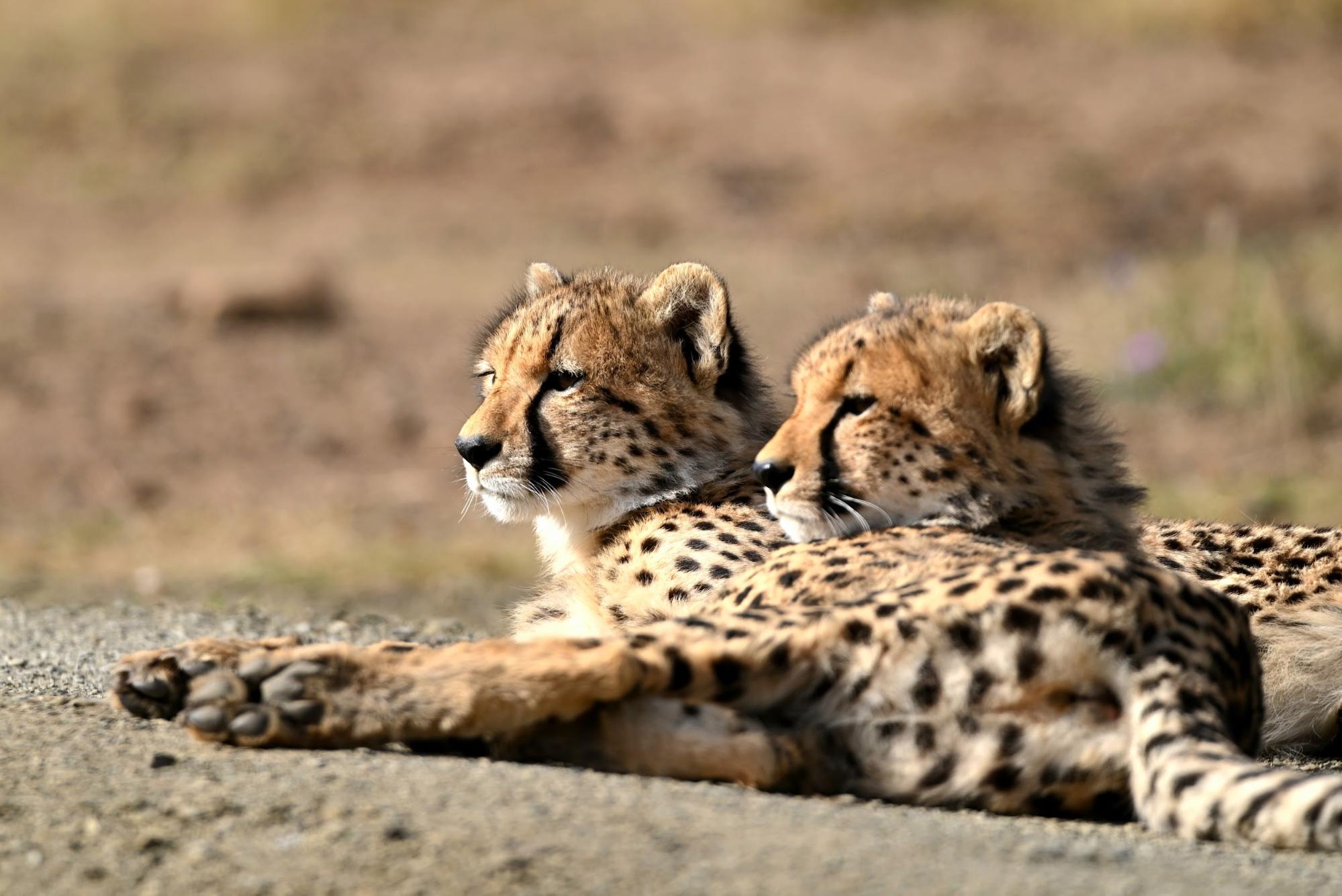
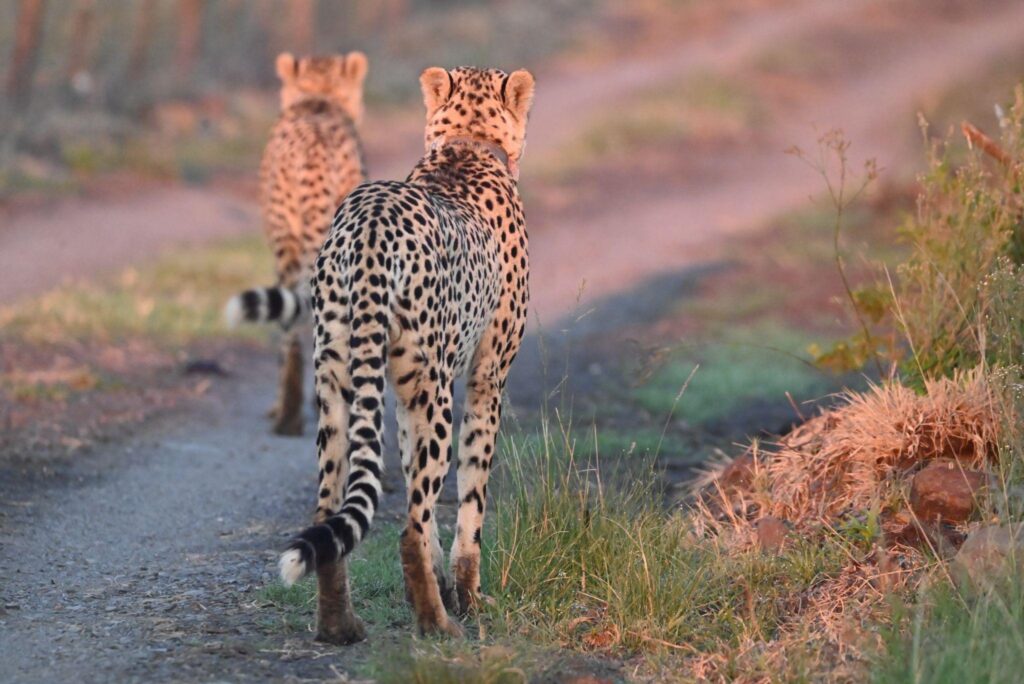
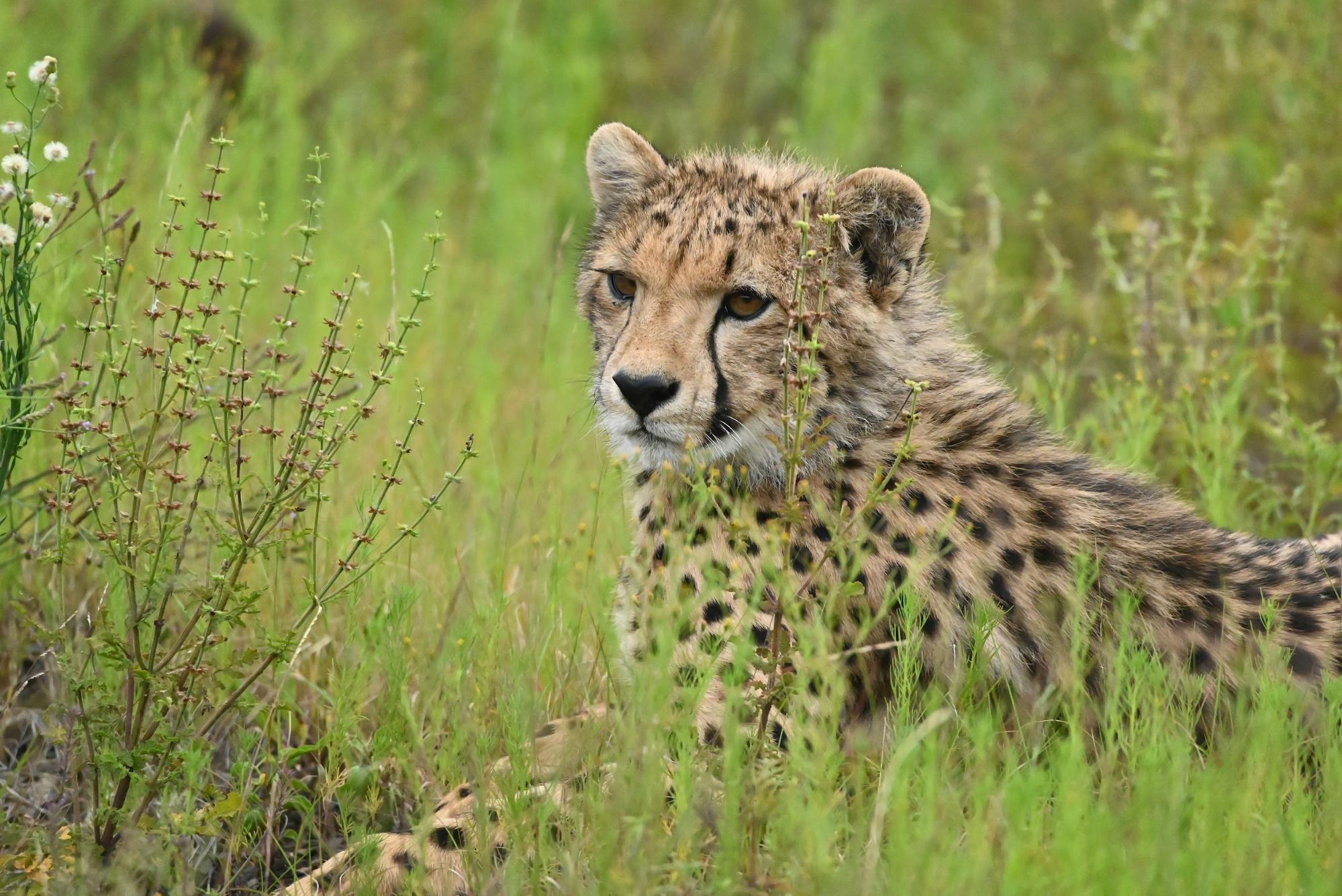
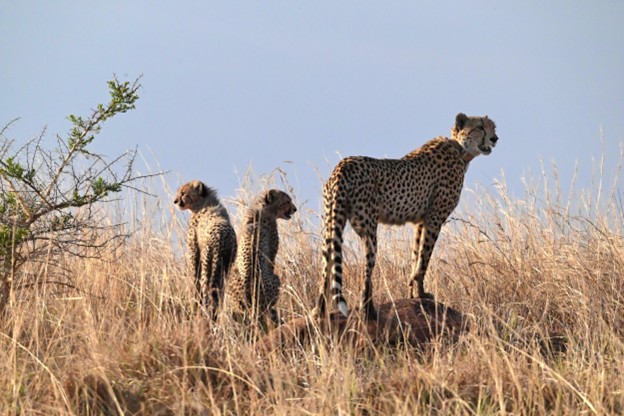
I cannot, in good conscience, not give a quick update on our spotted treasures. The cheetah brothers took down an eland calf towards the end of the month and it was in an open area quite close to the road. They have spent quite a lot of time in the southern and central regions of their territory this month while expertly avoiding all of the big cat drama along the way. Meanwhile, our two cheetah cubs have blessed us with frequent sightings of their high-speed training sessions. Mom looks on as they chase one another through the reeds and the longer grasses, but she also joins in the activities every now and again. They are almost a year old now and are looking more confident with each passing day. We watched them stalking and chasing Helmeted Guineafowls one morning which was both informative and captivating.

The change of season brings with it a change of feathered friends and changes in our sedentary birds as well. The Long-tailed Widowbirds are moving into their eclipse plumage as their tail feathers elongate and their feathers blacken. We have logged a few migratory species already, namely Red-breasted Swallows, Black Kites and Wahlberg’s Eagle. Field Guide Promise reported a Senegal Lapwing a few days ago that was foraging in the firebreak on the western boundary, and I have noticed an increase in Quailfinch and Orange-breasted Waxbills in the same area. Within the next couple of weeks we are expecting to start hearing a few cuckoos, and to possibly see some Temminck’s Courser and the Grey-crowned Cranes!

As the seasons begin to change, we are reminded that windy conditions lie ahead with the
possibility of Spring rains and some cold fronts. Our morning game drives begin at 06:00 and the sunset drives are now beginning at 15:30. Please don’t forget to bring your own bottles with you to help us reduce plastic and paper waste.

See you soon for your next safari adventure! Stay wild!

Head Guide Noleen Turner

Rangers Report – June 2026

Return guests & New Experiences

Our big cats came out to play this month, and gave us some nailbiting moments and epic photographic opportunities. From the newest recruits to the resident legends, the sightings were special and unforgettable. Return guests visited from near and far this month and shared in some intense new experiences that have changed their lives forever.

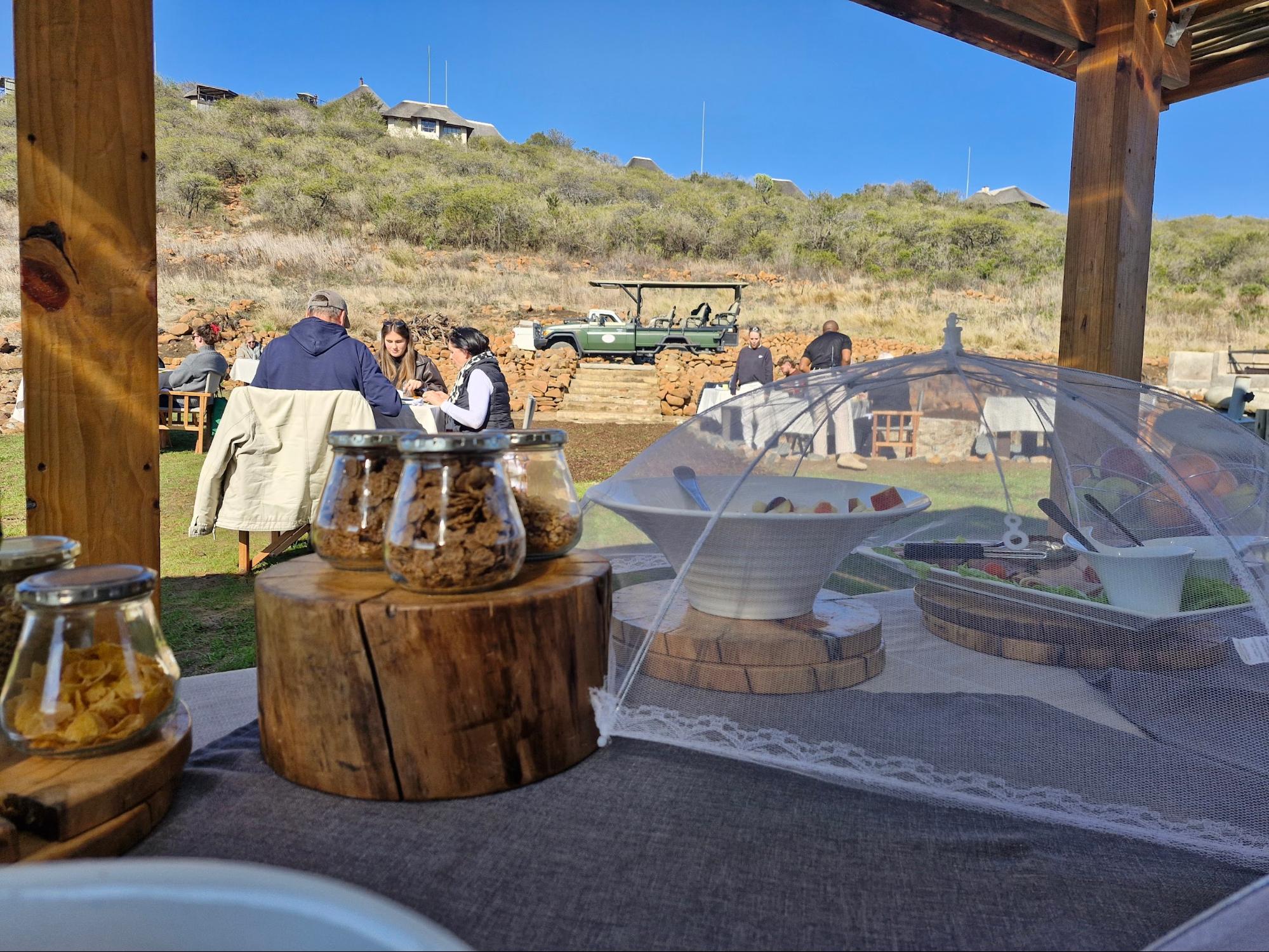
Let’s start this month’s report with some news from around the lodge. The elephant herd spent some time in the south of the reserve and some young bulls ventured down to Hoopoe Dam to check out the new fire pit and test out the steps. They gave them two trunks up and headed into the thicket below Room 5. We hosted a very special wedding at Umzolozolo in June. Vows were exchanged out on the deck and a sensational photoshoot took place across some beautiful locations in the south. Guests have enjoyed a couple of bush breakfasts down at Hoopoe Dam where the mild winter sun has made for a fabulous way to thaw off after a chilly morning safari. Our lodge continues to receive upgrades and improvements; a few of the older chalets are due for revamps and the ambient lighting around the lodge grounds is looking fantastic.

The most significant sighting that field guide Mark and I experienced this month involved the two new male lions. We were conducting our morning safari when lions were called in over the radio. It was the southern lionesses, the dominant male and the two new male lions. They were within a few hundred metres of each other and tensions were running high. Guides reporting from within the sighting indicated that there was a great deal of audio and that the big male was pushing the two males further south. We took a standby and waited for our opportunity. I made my way into the loc a few minutes later to view the lionesses that had gone static on the road. They seemed pretty unaffected by the whole ordeal and posed beautifully for some photos. As I was leaving the females, the big male lion crossed ahead of me and disappeared into the dense acacia thicket. I caught a glimpse of him a few minutes later and assessed that he was in hot pursuit of the younger males in the southern plains. As luck would have it, my instincts were correct. As we observed the two young males’ behaviour, we quickly realised that they were stressed and on high alert. The dominant lion was not prepared to let them go without a warning and a reminder of who is still king of Nambiti. It was exhilarating and very informative. We eventually returned to the lodge with quite the story to tell.

The cheetah brothers featured quite a bit this month as well. They popped up in the south on a number of occasions and even entertained us with one of the zebras that frequently patrol the fenceline. You realise the size difference between the slender cats and the stocky equine when the two species are in close proximity to one another! I must say, as a photographer, the crepuscular hours certainly provide the more perfect conditions for shooting these golden cats. The elephant herd continues to inspire and amaze. They move large distances to find food in the winter months but will also stay in an area for a few days if there is an abundance. We caught up with the herd a few times and also with some of the bulls that are moving around on their own. Our hippo pods are always a treat to view in the winter months. They can be seen sunbathing in the milder conditions on the banks of the dams and on some occasions they are even grazing close to the water’s edge at midday. If you want to get good photos of hippos, winter is definitely the best season to visit.

In the second week of June, our lodge was involved with a dehorning event. The ongoing challenge of rhino poaching continues to ensure that our population needs to be monitored and dehorned on a regular basis. Guests booked in during the event were directly responsible for the sponsorship of the event and their contribution to the protection of the species will never be underestimated. The day was charged with emotion. At times it felt like time had stopped and we were looking in on everything from the outside. At times everything was high-paced, chaotic even and it felt like we were right there feeling all the feels. Being a part of this kind of conservation initiative is life altering; it makes you grateful, it makes you thoughtful, it makes you feel guilty, but it also leaves you humbled and extremely significant within the bigger picture.

Before ending off the report for the month, I have to mention how entertained we have all been by the giraffes! Quite possibly the most quintessential mammal of Africa, these tall wanderers have shown so many of their quirks over the four weeks. We have observed them as they browse the acacias and regurgitate the mouthfuls, as they pick up bones to obtain phosphorus and calcium, as they bend down low to drink water and as they cross over plains and move silently through the dense wooded savanna. There is a newborn calf in the south that still has its umbilical cord, and there are many dominant bulls that can often be seen from various spots around the lodge. Quality time with these iconic mammals is always a treat and if we are really lucky, they will stick around and enjoy a sundowner or an Amarula coffee stop with us!

The cold weather has not been as consistent as we usually expect for June, there have been some frosty mornings, but milder temperatures have also been experienced. Still, we urge you to pack warm jackets, beanies, gloves, buffs and scarves to ward off the cold. Please don’t forget to bring your own bottles with you to help us reduce plastic and paper waste.

See you soon for your next safari adventure! Stay wild! 

Head Guide Noleen Turner

Rangers Report – May 2026

Surprise visits and big news

The month of May continued on from April by putting on the most spectacular display of sunrises and sunsets. It has been a very busy month in many aspects and I have found it challenging to report on the highlights! Anyway, here we go!

Let’s begin with the animal updates! The two remaining cheetah cubs have been blessing us with some wonderful sightings this month. Mum has chosen the southern plains as her base of operations for the last few weeks and we have observed the cubs as they venture out on hunting lessons. The two young male lions from Kwandwe were released onto Nambiti this month. They are exploring the south eastern section of the reserve at the moment, but getting good views of them has been tricky. Our spotted hyenas remain in the boma enclosure for another few weeks. It would seem that one of the females gave birth to some cubs and this will extend their time in quarantine to protect their chances of survival. We have managed to catch a glimpse of them from strategic viewing points that provide a long distance vantage point for sneak peaks. The youngest cheetah mum and her male cub have gone their separate ways. To protect the young male, reserve management has placed him in a boma and he will soon be translocated to a safer environment. The hyenas are not the only ones who welcomed new additions, our alpha wild dog has also given birth to a litter of pups. The den site location is expertly hidden from the road and we await the first sighting of the pups with much anticipation! With so much going on, there is still more to be excited about with the increase in leopard sightings around our lodge and in the south.

This next part of the report is going to highlight some interesting behaviours that we have observed while out on game drive during the month of May. May temperatures have been typical of the winter in that the mornings and evenings are icy cold and the middle of the day is mild and warm. At the beginning of the month, we had a strange afternoon with thunder, lightning and a burst of heavy rain. I was with the herd of elephants at Elephant Rock Dam as the weird weather descended on us. When the entire herd climbed into the dam to enjoy the water, we watched the raindrops bounce off the surface as the sunset colours lit up the scene. It was rather magical and I was in no hurry to leave!

With the mother and two cubs spending more time down in the south, they have had the attention of the two males more frequently than usual. It is well documented that male lions will kill the cubs of a rival male to ensure that their genetic line dominates, however, that is not necessarily the same for cheetahs. On an afternoon drive, we observed how aggressive and protective the female behaved in response to having the two males so close to her and the cubs. She isn’t likely to want to mate while the cubs are still so dependent on her, so she has to demonstrate a more hostile reluctance to ward off their advances. At one point the one cub got too close and received a dismissive swat from the male. It was a tense moment, but things settled down shortly after.

We are acutely aware of the fact that we have leopard activity around the lodge. From time to time we can hear their rasping call in the dark, and we have found tracks on the roads surrounding us. Field guide Promise was returning from an afternoon game drive when he caught the first footage of a leopard moving in the open patch to the west of our access road. It was a fleeting moment, but the big cat was mobile towards the lodge! Our trail camera also captured the same leopard strolling past our access sign at around 02:25am! I was returning home from a morning game drive, fashionably late as usual, when I spotted a big cat on the road in front of us. My initial thought was that we had finally located one of the lionesses! Almost within that very same thought, I uttered these words, “no, no, that’s a leopard”. There, only a few metres ahead, walked a big male leopard! What was even more remarkable was that we tracked and followed him for almost 15 minutes as he closed in on a herd of impalas.

The action in the southern region of Nambiti continued throughout the month. Witnessing a kill is a rare sighting, but two on one day is almost unheard of! We headed out on sunrise safari and soon realised that the day had something magical in store for us. The two cheetah brothers stepped out into the road in front of us as we were driving towards the southern carpark. I called the sighting in on the radio and usually other guides respond quite quickly to join the loc. When this wasn’t the case, it dawned on me that something else must be hogging their attention. It became clear what that something was when my cheetah sighting merged with a lion sighting! Having these two species in such close proximity to one another is almost intense. Our situation got even more unusual when the lioness burst forth out of the long grass and pinned down a large warthog! It took her quite some time to make the kill, but she and her sister eventually carried it off into the thicket. We were not the only ones who witnessed the whole event, the cheetahs saw it too, and they quickly used the distraction to make a hasty exit. Having returned to the lodge for breakfast, I was driving down to my house when I caught a glimpse of the same two cheetahs dropping down off Hippo Dam wall towards an unsuspecting nyala and her lamb. I made my way closer and took up a position on Woodlands Dam wall to watch everything unfold. The antelope left the safety of the water’s edge and moved out into the open. This was all the cheetahs needed and they exploded into action. A few strides later, the nyala lamb was in the jaws of a cheetah and the boys settled under a tree to enjoy their quarry. Over in seconds, but the memory will last forever!

We have enjoyed cheetahs in the mist, lions in the golden sun, elephants at dusk, wild dogs in the moonlight, a serval in the long grass, giraffes at sundowners, and hippo roadblocks! May has been a-May-zing! Autumn birding isn’t usually considered a fruitful season, but I have logged 164 species on the reserve. Some of the big highlights include African Fish Eagles displaying up at Cascades, Grey Crowned Cranes on the southern plains, a Mountain Wheatear on carpark highrise, a rare Greater Kestrel on Python Lane, an African Marsh Harrier around Links Dam, a juvenile Black Crake at Weaver Dam, a European Honey Buzzard at Twin Dam, a flock of White Storks at Mnandi’s Reservoir, and a Tawny Eagle scoping out a cheetah kill at Mushroom Crossing.

Things have been busy around the lodge, too! We hosted some digital creators (Tay-Tay and the Tantalising Twins!) who spent a few days capturing footage of our beautiful lodge. The floors in the main lodge got a makeover and it has really elevated the space. A new staff accommodation block is being built and the area around Hoopoe Dam is also undergoing some upgrades. We have also hosted a few sundowners, bush dinners and breakfasts down at the dam.

Chilly weather persists and things will only continue to get colder as we move into winter. Remember to pack warm jackets, beanies, gloves and scarves to ward off the cold, and to bring your own bottles with you to help us reduce plastic and paper waste.

See you soon for your next safari adventure! Stay wild! 

Head Guide Noleen Turner

Rangers Report | February 2026

Charcoal hunts and rhino stunts

Where last month’s landscape was shaped by controlled burns and charred earth, this month has brought a remarkable transformation. Fresh green shoots are emerging through the softened soil, while the landscape is steadily filling with layers of vibrant green. Across the reserve, trees are coming into leaf and bloom, signalling the arrival of spring and the beginning of another season of renewed growth. Let it be known and shared far and wide that September has been a truly spectacular month at Umzolozolo Safari Lodge.

Before the first week of Spring was allowed to rest in our memory banks, the bush telegraph was abuzz with news and views. Umzolozolo celebrated its 20th anniversary with a festive weekend of shared memories, great company and much laughter. Stories from deep within the two decades of its history filled the air as the fire crackled and the voices shared. To commemorate the occasion, our owners were treated to their very first leopard sighting on Nambiti. It wasn’t brief, and it wasn’t distant. The big tom was lying within 8m of the Umzolozolo signboard and it was as if he knew the moment was one that needed to be enjoyed.

Traditionally, I begin the report with news of the big cats or the infamous characters that we all know so well. This time around, I am going to tell you about some of the more unusual creatures we have spotted while out on game drive this month. On a morning drive, while heading back from a coffee stop through Den Valley, one of our guests stopped me and pointed out a Southern African python cruising down the rocks. The reptile was easily over 3m long! In the two weeks that followed, Promise spotted a puff adder and I saw a juvenile Southern African python swimming across Woodlands Dam. We also welcomed back a couple of Boomslang at the lodge. Snakes were not the only reptiles that came out to enjoy the warming temperatures; Water Monitor Lizard sightings have been on the increase, I got footage of a Rock Monitor Lizard crossing one of the open patches near Gideon’s Memorial, Flap-necked Chameleons have spiced up our sunset safaris and the Southern Tree Agamas are sunbathing on rocky surfaces around the lodge.

The reserve is looking particularly magnificent at this time of year. As you take in the landscape, the contrasts are striking: expanses of blackened earth giving way to brilliant green shoots, set against the rich, rusty-red tones of the dolerite boulders. Many of the herbivores are drawn to the delicious bounty of fresh vegetation and where there is an increase in primary consumers, you had better believe there will be an increase in predators as well.

Two of the more memorable moments in these open patches involved an unsuspecting reedbuck and an unfortunate zebra. Myself and Siya were watching Malica and her two cubs towards the end of a morning drive. The road we were on was incredibly rocky and while I was sitting with the cubs, Siya looped around to try and get a visual of the mom who had moved down into the gully. In the blink of any eye, the cubs got mobile and seconds later we were sitting behind Links Dam watching them feast on a reedbuck ewe that Malica had taken down. None of us saw the kill, it happened that quickly, but it was awesome to watch the cubs figure out how to open the carcass to start feeding. They are nearing the time in their lives where mom will abandon them and they will have to fend for themselves. In light of this next chapter, the cubs have been fitted with their own tracking collars. A milestone moment in their journey. The unfortunate zebra fell victim to the two new male lions and the southern lionesses. The hunt took place in the late afternoon but the big cats were still feasting the following morning. With the area so open, the visuals were graphic and raw. It was a photographer’s dream in terms of proximity and colour. Interestingly enough, these four lions followed up the zebra meal with a warthog and then a waterbuck over the next two days.

Unique sightings have undoubtedly been a feature for this month. My guests and I watched a Reed Cormorant hunt and devour a frog one morning at Links Dam. On another occasion, this time at Bass Dam, we watched as a toad defied death by inflating itself so much that the Water Monitor Lizard wasn’t able to swallow it! The interesting sightings haven’t only happened during daylight hours. On an afternoon game drive, we turned around to rescue a guest’s cap before continuing back to the lodge by taking the scenic route. This route took us along Spruit Road where we believe we encountered a tree full of glow worms! As if that wasn’t crazy enough, when we turned up towards the lodge we found a male leopard standing off to the side of the road. It walked off into the thickets as we approached but then popped up a few more times to drink from a puddle in the road before eventually lying down in the grass. We actually moved off to allow other guides to get a view! On a separate evening, we were driving back after sundowners and we spotted a caracal. The smaller cat was sitting in the grass staring back at us before it disappeared into the darkness in search of food. Sightings of caracal are rare, and so when we encountered another one on the following night, it was clear that September was feeling generous! The smaller cats featured a few more times but this time it was the servals that stole the limelight. At least two females have litters of kittens. One female in the north has two kittens while the one in the south appears to just have one. Both mothers have been spotted walking in the road or hunting rodents just off to the side of the road. They are incredibly successful hunters and gobble their prey within seconds!

Our Square-lipped Rhinos have also been very entertaining. On a morning drive we came across a mother and a calf that were accompanied by a large bull. The cow was not in the least bit interested in the bull and she made it quite clear. A few minutes later, another mature bull arrived on the scene and this is when things heated up. There was posturing and a bit of shoving, however, it was the audio that really had all of us quite intrigued. One of the bulls moaned or whined at the other one for the duration of the standoff. It was a sound that none of us will ever forget! The young calves that are being weaned off of their mothers’ milk have also expressed some interesting sounds. A high-pitched, plaintive squeal can be heard each time the calf begs the mother for some milk. With their little horns starting to grow longer, you can imagine the discomfort when they move in to suckle from a teat. Every encounter is an opportunity to learn more about the dynamics, but also to fully embrace the moments and spend time observing their behaviour.

One of the highlights from September is most certainly the newborn giraffe calf. Field Guide Mark and I headed out for an afternoon game drive and happened to choose the same route as we left the lodge. To our surprise and delight we stumbled upon a newborn giraffe. We knew that we must have just missed the birth because some of the afterbirth was still visible. While we were there, we watched the calf take its first steps and have its first suckle. These are the moments that make each game drive special. You just never know what you will find around the next corner!

As the colours of Spring begin to pop up all over the place, we are starting to see and hear many of the beautiful feathered characters that call Nambiti home. The Long-tailed Widowbirds and Pin-tailed Whydahs are wearing their eclipse plumage and tail feathers are beginning to lengthen as they transition into their breeding outfit. The call of the Red-chested Cuckoo is ringing out across the valleys as they return to seek out host species for the breeding season. The low booming call of the Common Quail can be heard at dusk if you listen carefully. Then, of course, one of the most loved species that can be heard around the lodge is the African Paradise Flycatcher that is starting to set up nesting sites for the season. We have also identified and logged a few interesting species this month, most noticeably a Black-chested Snake Eagle, a small flock of Swee Waxbills, a Black-winged Lapwing and a pair of Senegal Lapwings!

Our morning game drives are now departing at 05:30 and the sunset drives are still beginning at 15:30. Please don’t forget to bring your own bottles with you to help us reduce plastic and paper waste.

See you soon for your next safari adventure! Stay wild!

Head Guide Noleen Turner

December Ranger’s Report

Quality cats, festive zoomies and stormy days: December at Umzolozolo

Season’s Greetings! We hope that your festive season was a time of laughter, blessings and special moments. This is your final ranger report for 2025!

Guests have traveled from far and wide with one request this month. Yes, you guessed it, the cheetah cubs. It was as if the spotted beauties knew the plan because they gave us some of the most epic sightings in December.

The youngest mother has moved her two cubs, that are now almost a year old, down into the southern region of the reserve while expertly avoiding contact with other predators and providing regular meals for her growing offspring. I remember responding to a sighting where she had killed a young kudu and then a day later she took down a juvenile ostrich. At this stage, her cubs are observing her hunts and will soon be expected to show off their skills.

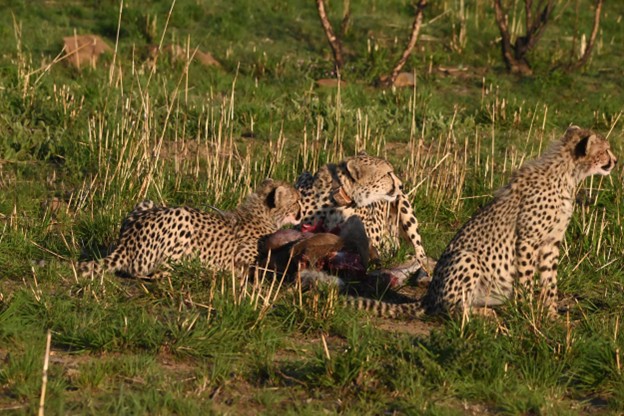
The older mother of the five younger cheetah cubs is also doing very well. They are becoming more athletic in their play routine and can be seen practising the ankle tap and pinning down skills. On a few occasions this month, they were unnervingly close to the lionesses but the mother remained steadfast and alert to avoid exposing their location and risking any conflict.

A highlight from this month has to be that the southern lionesses and the dominant male lion killed a warthog close to our lodge access road. The big cats remained in the area for a few days and kept all of our guests and staff on their toes while moving around the lodge grounds. It was wild!

The two new male lions have been providing brief cameos during the course of the month. Sightings have been brief and visuals have been somewhat disappointing, however, the frequency of sightings is improving and we are confident that they are relaxing around the cruisers more and more. These two males are from Zululand and they have been introduced for genetic variation. It is our hope that once they have settled and bulked up that they will begin to interact more with the lionesses. They will need to be wary of our dominant male for a while longer as he is still in excellent health and ready to defend his territory!
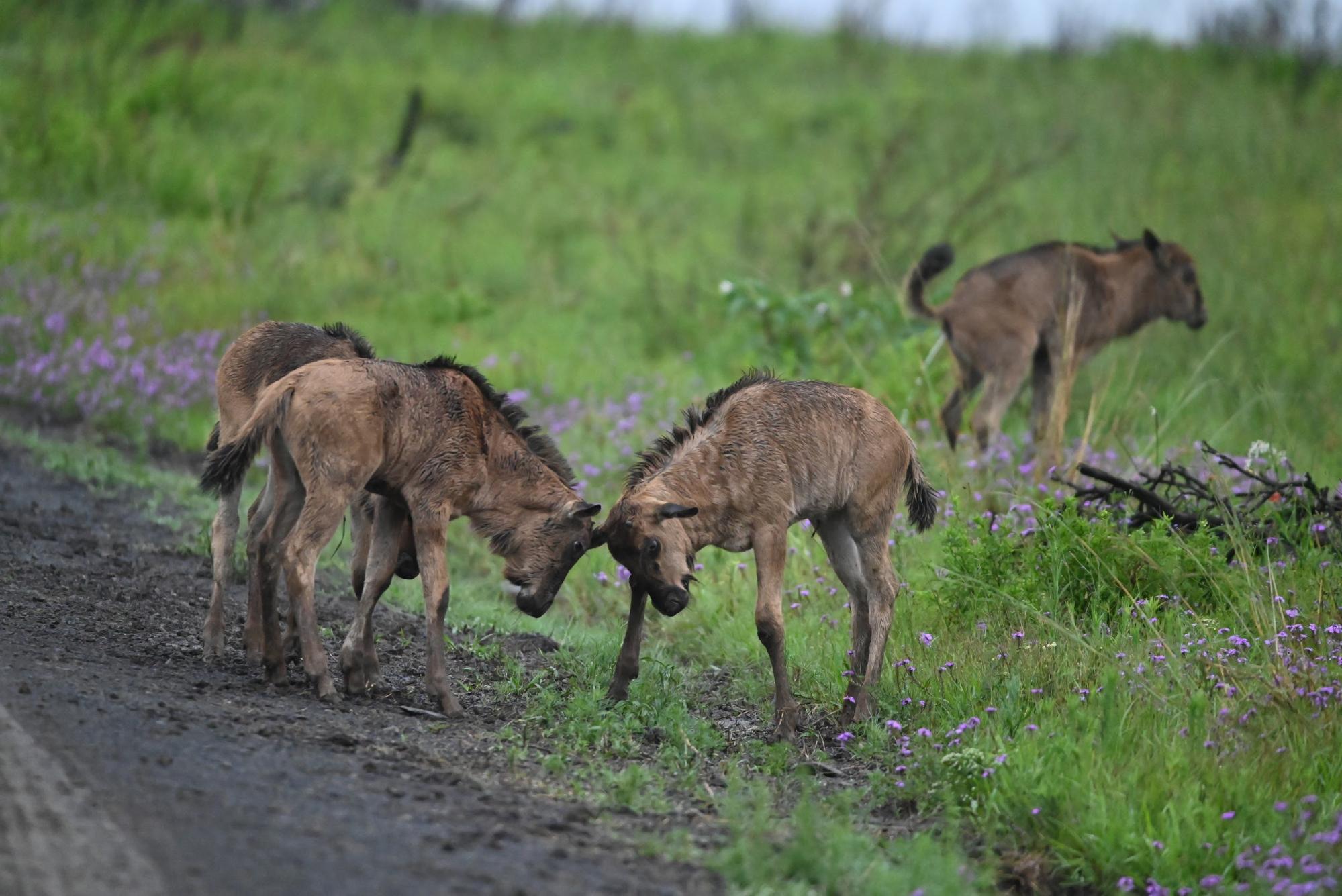
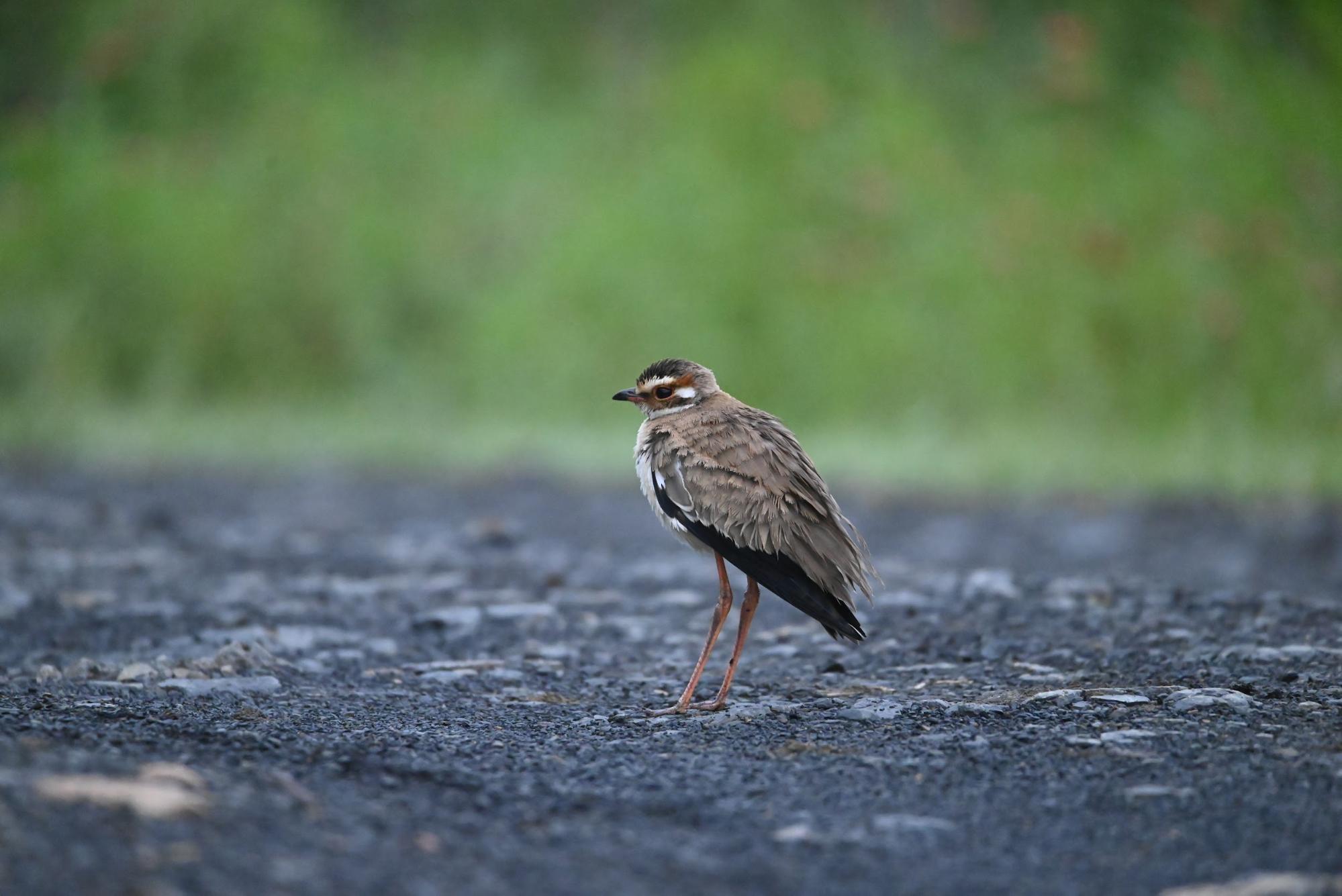
Our new generation of animals have also provided us with wonderful moments. The blue wildebeest calves spend a lot of time bouncing around the plains working out their long legs and enjoying all of the space. The black-backed jackal pups are also out exploring their environment by playing on the termite mounds and pouncing on sticks in the grass. We have spotted a few blue crane chicks strolling behind their devoted parents as they learn how to forage and navigate the flooded plains. The bounty is evident all around us and we are thoroughly enjoying the opportunities it brings our way. Summer birding is always rewarding on Nambiti. Wahberg’s Eagles have been more abundant in the sky, and we have logged some interesting species including White Storks, Lesser Moorhen, Cuckoo-finch, European Roller, Booted Eagle, and Bronze-winged Courser.

Remember to pack waterproof clothing and to bring your bottles with you to help us reduce plastic and paper waste! We are looking forward to sharing memorable moments with you in the new year.

See you out there! Stay wild! 

Head Guide Noleen Turner

November Ranger’s Report

Epic battles, baby booms and predator prowess: November at Umzolozolo

No game drive is ever the same. Every time we head out onto Nambiti, there is something new to experience. The month of November proved this many times over!

I begin with an account of the most epic battle! On a morning safari, I drove out of the lodge and turned down Porcupine Ridge towards the Ndaka River. The air was still and we were scanning the thickets for activity. To my left, I saw two grey bodies barreling down the hill towards the river. On closer inspection I realised it was two black rhino bulls involved in a territorial battle. The two were exchanging blow for blow and it was evident that things were serious.

The battle moved down into the river bed where slippery shale provided a perilous arena. At this stage, Field Guide Promise joined me as we watched on with awe and disbelief. The two bulls rammed, jabbed and shoved each other, frequently drawing blood and clearly leaving bruises. The water and mud splashed around their feet as the combatants relentlessly pounded and pushed. They were physically exhausted, but with so much at stake the battle raged on for at least 75 minutes. It was truly epic and certainly unforgettable!

Towards the middle of the month, our baby boom began. We have seen chicks, lambs, calves and piglets at every turn. The newborns are exploring their new home and scooting around the plains and thickets without a care in the world.

A feature for the month has been the frequency and quality of sightings when it came to the northern lionesses, black rhino, white rhino, cheetah and eland. Not only have we had fantastic moments, but also interesting behaviours and interactions.

I remember parking Hoopoe 1 on Tatu, Field Guide Mark was in the same loc, and experiencing a brave and intense stalk and hunt. The northern lionesses tried to take down a buffalo. They failed in the end. The experience was still very exciting!

The oldest cheetah female on Nambiti has been spending loads of time in and around the lodge. Her favourite time of the year is here! She has stalked and ambushed at least four impala lambs on our access road or down at Hoopoe Dam. While nobody likes to see a newborn animal lose its life, we have to appreciate that predators have to eat and populations have to be kept in check. She isn’t the only spotted hunter who has been targeting the bounty. Our brave mother of five cubs is putting veal on the dinner table every couple of days to keep them growing bigger and stronger! Sightings of her are infrequent, but equally as rewarding when the stars align!

We have had some exciting new additions to the predator population on the reserve with the release of two young male lions. The pair hail from Zululand and have been quite elusive up to now. Nobody has spotted them on game drive yet! Meanwhile, there are three new African Wild Dogs that are getting used to their new surroundings in a boma on the reserve. They are being monitored closely and we will keep you posted on their release date!

With the passing of his brother, our dominant male lion is adjusting to the role of lone king. Moments with the handsome cat are fewer and certainly cherished. He was enjoying some quality time with the Ntombi pride before joining the Tswalu pride in the south where he could be seen from Umzolozolo.

Just a few more quick updates on some of the characters you know and love. Our youngest cheetah mom has been seen teaching her two cubs how to stalk and hunt prey. They have been dodging the lions and buffaloes up in the north for most of November. The elephant herd has been darting from south to north and east to west. Highlights with the grey giants have been when they swim in the dams in the south and also when the entire herd strides through the open plains. The cheetah boys, as always, provide us with epic moments and special photographic opportunities. They know the catwalk and we love them for it!

From the lodge side, we have almost completed phase two of our solar installation and will soon be completely off the grid! We hosted a beautiful wedding, and celebrated with birthdays and anniversaries! 

Summer storms have started, and the weather is unpredictable out here! Remember to pack waterproof clothing and to bring your bottles with you to help us reduce plastic and paper waste! We are looking forward to sharing memorable moments with you during your next visit.

See you out there! Stay wild! 

Head Guide Noleen Turner

October Ranger’s Report

Big moments, new beginnings and family feasts: October at Umzolozolo

“Rhythms of the Wild”

The bush hums with quiet triumphs —
new tracks pressed into red earth,
first breaths taken beneath golden skies.
Around each bend, stories unfold —
a pride united,
a zebra foal finding its footing,
the dance of the cranes setting the scene.
The wild is feasting,
and with every sunrise,
we begin again.

October has been epic! So epic, in fact, that I honestly don’t know where to begin. I have accessed my photos from the month and this is what I will use to create the timeline for this month’s report.

Our Blue Cranes are in the midst of choosing partners, selecting nesting sights and preparing the nests for eggs. I spent almost an hour with a group of seven cranes one morning. The males were displaying very interesting and entertaining postures that were combined with leaps and bows. It was captivating to watch! The cranes are not the only ones preparing for the arrival of eggs. Our weaver birds are diligently gathering material to weave into their hanging nests and the coots are stockpiling reeds to construct their floating nests. We have observed a few more birds on the reserve this month like Common Buzzards, Jacobin Cuckoos, Greater Honeyguide and an African Jacana.

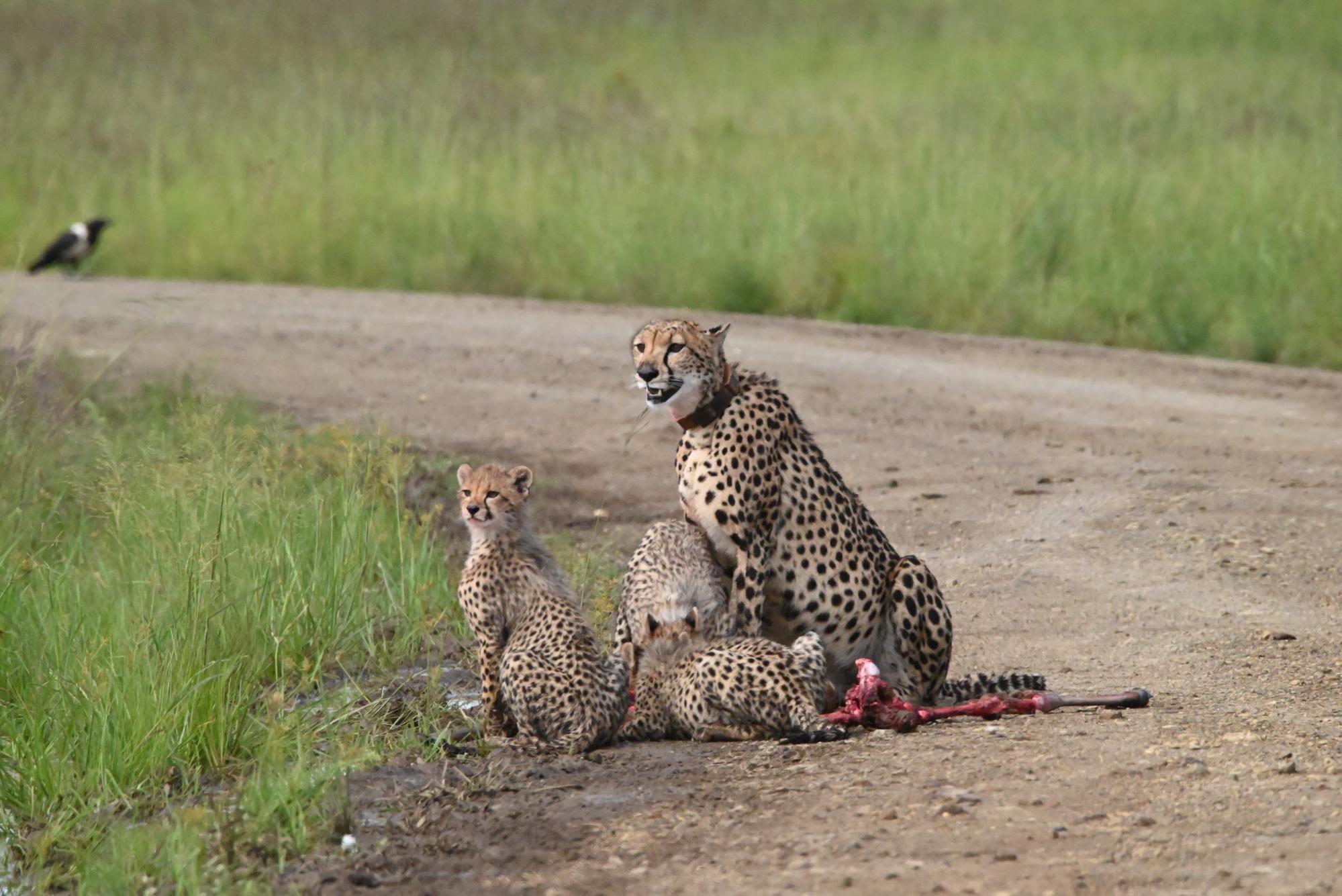
While I realise that cheetahs featured in my September report, I have to make mention of how much they have dominated our guest experiences this month, too. The cheetah brothers have been in top form; they took down a blue wildebeest one morning and we almost got to see the entire hunt from start to finish. The transition from uninterested to full speed was incredible to watch! They have also been interacting more with the older cheetah cubs and providing us with some intense moments. One morning in particular comes to mind. The youngest cheetah mom was feasting on a common reedbuck ram with her two cubs. They were being harassed by a pair of black-backed jackals but when the two cheetah brothers arrived on the scene, the jackals were the least of their worries. The cubs bolted away from the kill and the mother followed. Somehow, in the pursuit, the one cub became isolated and we were relieved that they were reunited. The mother of our five cheetah cubs, as we had hoped, is becoming more relaxed around the vehicles. She has been spotted a few times on game drive and even took down an impala ram quite close to the road where we could observe the cubs feeding and the family allo-grooming.

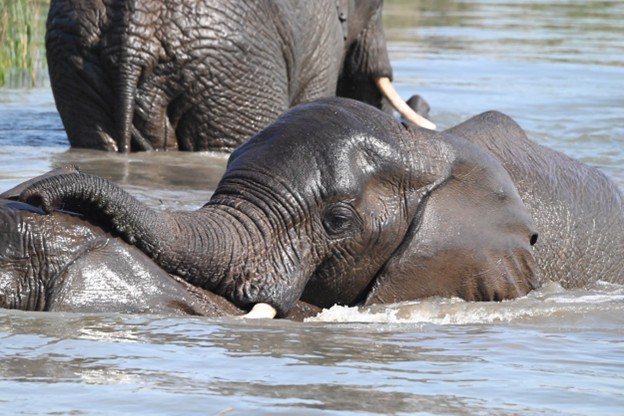
Our elephant herd has been back in the south and they have paid us a visit up at the lodge a few times this month. On a number of occasions, the heat has inspired them to spend some time swimming and playing in the dams. Watching elephants approach water and then fully submerge themselves is an experience that never disappoints! Their genuine delight and excitement is tangible and it almost always seems to be the younger bulls that linger that extra bit longer.

The Tswalu lionesses popped down south and took down an eland cow this month. It presented a wonderful opportunity to get some footage on the thermal camera. We headed out on a night drive and came across the one lioness in the road. We spent time filming her and then she gave us an almighty roar and sent us on our way in style. The Ntombi pride made a few cameo appearances this month as well. The block burn up in the northern plains has provided excellent opportunities to spot the big cats out in the open. Towards the end of October, we happened upon them stalking a buffalo cow. The moments before the young lioness took her shot were tense and very exciting. She got so close but the buffalo got away.

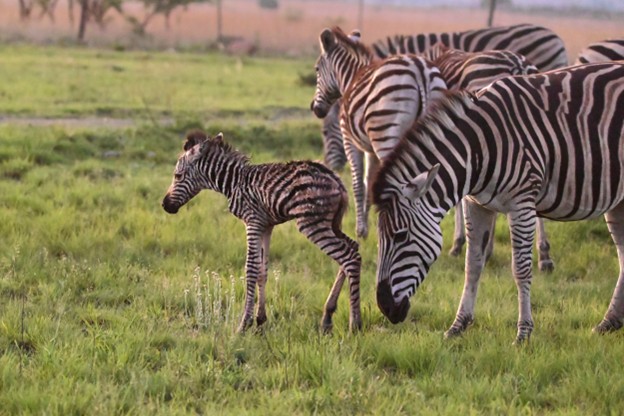
There were a couple of unexpected surprises for me and my guests this month. We were called in to join the sighting of a zebra mare that had just given birth to her foal. It was an intimate moment that evolved into quite an intriguing sighting. We watched as the mother appeared to treat the foal in a rough manner while simultaneously protecting it from other zebras around them. She knocked it down a couple of times and the foal would struggle back to its feet. As it gained stability, its body warmed up and became flexible enough to bend down and take its first suckle. Amazing! We also experienced the complete process of finding, darting and safely translocating black rhino. The morning was long, but the experience was unforgettable. Nambiti is part of the black rhino expansion project and it was time to move two females to a new home to continue the project’s aim. We were all sad to see them go, but we recognise the plight and the privilege.

The rainy season is upon us! Remember to pack waterproof clothing and to bring your bottles with you to help us reduce plastic and paper waste! We are looking forward to sharing memorable moments with you during your next visit.

See you out there! Stay wild! 

Head Guide Noleen Turner

September Ranger’s Report

Patches, spots and babes: September at Umzolozolo

Welcome to Spring! The rain has arrived, but the cold temperatures have lingered. Morning game drives are chilly, skies are cloudy and roads are muddy. Wild flowers like Purple Verbena, Star Lilies and Evening Primrose are popping up in the areas that the reserve recently burned. The fresh green grasses resembled astroturf fields, and the grazers are making good use of the tasty veg and open views. While the big cats are finding it tricky to hunt in the open, the cheetahs are cashing in on the vast spaces and plentiful prey.

September has been a wonderful month for cheetah sightings. I shared a few images and videos on social media of the oldest female spending time around Hoopoe Dam and our lodge this month. She was also seen with the two males on the odd occasion. Our youngest female continues to impress us with her parenting prowess. She is moving her two cubs around to avoid encounters with the lions, and they are looking healthy and full of youthful exuberance! We received confirmation from reserve management that our middle female cheetah has a new litter of cubs. She is keeping a low profile for now but we hope to catch a glimpse of the cubs soon!

A species that has featured in many entertaining moments this month is the giraffe! Large aggregations of them have been seen in the southern and central regions. I have caught them on camera exhibiting a number of interesting behaviours; from osteophagia to sparring. These graceful creatures are curious and often reveal hidden predators from their superior vantage point. Guests have appreciated their silhouetted beauty at dusk and dawn, and they seem to know exactly how to pose for the quintessential picture!

We celebrated World Rhino Day this month and the frequency and quality of sightings could almost suggest that they knew it was their time to shine! Nambiti provides a safe haven for both Hook-lipped (Black) and Square-lipped (White) rhinos. Our anti-poaching unit has been boosted by the introduction of a k9 unit and they have leveled up with advanced training routines. We are seeing many mother and calf combinations while out on game drive and baby rhinos are a firm favourite! As the populations continue to grow, we acknowledge the role that our reserve management plays in acquiring partners who support the dehorning procedures and monitor their movements within the reserve boundaries.

Some exciting news for avid birders, I recorded my first African Cuckoo this month! I am adding it to the reserve bird list as an uncommon summer migrant! Our Blue Cranes are selecting nesting sites, the Lanner Falcon chicks have hatched and at least one clutch of Ostrich chicks are exploring the reserve. One of the field guides on the reserve called in a very rare sighting of five Southern Ground Hornbills this month. As luck would have it, I didn’t go out on game drive that day and missed the sneaky visitors.

Up at the lodge, we have had many reasons to celebrate in September! Heritage Day was a colourful affair, the Springbok victory over Argentina was a highlight and the soaking rains are much needed after a long winter period.

The last quarter of 2025 is upon us and the festive season is approaching fast! If you are planning to spend some quality time with us over the next few months, check the weather predictions for your dates and be prepared! Bring your bottles with you to help us reduce plastic and paper waste! We are looking forward to sharing memorable moments with you out on safari.

See you out there! Stay wild!

Head Guide Noleen Turner

August Ranger’s Report

Mega Munchies, Classic Carnivores and Hefty Hussles: August at Umzolozolo

The windy month of August usually threatens to blow us away, but it hasn’t been all that gusty this year. Our mornings have often been misty, but mostly clear and still and beautiful. Towards the middle of the day and into the afternoons, the winds have picked up and left us feeling a tad tumultuous. I will say that the sightings this month have been phenomenal and really have blown us away!

Let’s kick things off with the mega munchies! The elephant herd has taken a particular liking to our Jade plants up at the main lodge. Considering that we are waiting for the first Spring rains to transform the vegetation on the reserve, these herbivorous giants are sniffing out any treats that may be on offer. 

As a field guide at Umzolozolo, one of our hosting duties is to escort guests to their chalets after dinner. With elephants in camp, this can be an eventful task. Our other senses are heightened when darkness falls with smell and hearing gathering the best intel to navigate guests to the safety of their chalets. One evening, having ensured the safety of our guests, I found myself trapped up at the lodge with the elephants blocking both routes to my room. For the next 90 minutes I sat at the window and became accepted into their space as they explored the vegetarian options around the offices. They knew that I was there, it was an unforgettable experience!

It could be said that with the thinning of the bush towards the end of winter, we become more likely to observe hunting activities. In August, we have witnessed more successful hunts than usual and even a few entertaining misses. Field Guide, Siya had the two cheetah brothers take down a warthog soon after he left the lodge for morning game drive. I had one of the southern lionesses ambush an eland behind my cruiser on the same morning! Siya and I also watched the two lionesses tracking a domestic cow calf alongside the fenceline to close out an afternoon safari, and I observed the cheetah coalition show interest in a newborn giraffe baby. Some classic carnivore moments and a couple of rare ones to share with our Umzolozolo guests!


Our youngest cheetah female has recently changed her hunting grounds. Her two cubs are five months old and they are learning survival and resilience lessons every day. It has been difficult to catch up with them as regularly as we used to (now that the drive to where they are is further), but it just makes the moments we get with them even more special. Field Guide Mark and I cashed in on some quality time with them this month and it was great to see how tall the cubs are getting.

With the elephant herd spending much of the month in the south, we have enjoyed their shenanigans and we have enjoyed tracking them. We were having a bush breakfast one morning down at Hoopoe Dam and the entire herd mobilized down the hill towards us. They move so quickly, especially when a helicopter is buzzing nearby. The matriarch led them past our breakfast spot and moved them further west into the denser thickets. One of the bull elephants, that we introduced from Tembe Elephant Park, is in musth at the moment. His elevated levels of testosterone have placed him in a more sassy state this month and he has been pushing his weight around and testing the boundaries.

Sightings of both square-lipped and hook-lipped rhinos have been more frequent and quite rewarding. Larger crashes of our grazing population are out and about, and we have a handful of youngsters exploring the reserve alongside their protective mothers.

I watched some interesting behaviour being exhibited by a hook-lipped cow while out on a sunrise safari. She crossed the road in front of my cruiser and proceeded to dustbathe in a bare patch of mudstone soil a few metres off the road. She used her front toenails to scuff the ground to loosen more soil and then rolled around in it. The loose clay soil would have provided her skin with protection from the sun and parasites. It was a unique and special sighting!

Up at the lodge, we have had some fun and games. Our maintenance team and Amos (our landscaper) have been busy mending and replanting things in the wake of the elephants’ visits. The weather in the evenings has been conducive to hosting dinners in the boma where guests can enjoy the crackling fire and a starry sky. Our guests have chosen to celebrate many big life events at Umzolozolo this month, from milestone birthdays to anniversaries and proposals. In between these festivities, we have gathered together to watch some massive sporting events featuring our national teams and our favourite league teams in action!

With winter behind us and spring months ahead, game drive times have changed. Morning temperatures are still fresh, but it is certainly heating up as the sun climbs higher  in the sky. Thunderstorms are more likely to happen, so don’t forget to pack accordingly and while we are on the topic of packing…a friendly reminder to bring our own bottle along when you visit.

See you out there! Stay wild!

Head Guide Noleen Turner