Upgrades, Wildlife Courtships, and Safari Spectacles
For those of you who have visited us recently, you will have seen the new dam and you may have enjoyed a bush breakfast alongside it. This month we have begun building a wooden deck that juts out to the north of the dam wall. This upgrade will add to the bush breakfast set up and give us an ablution facility. We also have four new spotlights that illuminate the dam so that we can observe nocturnal activities.
Two of our Secretarybird pairs have begun building their nest atop an acacia tree in the south. There has been much courtship taking place and sticks are being gathered to get ready for new chicks. Many of our groundbird species have been spotted with their chicks. The cryptically coloured youngsters are learning key survival strategies like how to find food in herbivore dung!
The tallest land mammals have been our entertainment this month. We have been captivated by their playful sparring, mesmerised by their lanky strides and delighted by the newest members of each aggregation. Sundowners with a tower or journey of giraffes have been such a treat.
Morning drives are certainly colder and the sun is setting much earlier every evening. The impala rams have started their rutting antics, and we are seeing many grimaces of the flehmen variety amongst our mammalian males. The constellation of Orion will soon be dipping out of our night skies as Scorpio takes its place in the winter lineup.
It is absolutely one of the best months to be on safari, and Umzolozolo is undoubtedly the lodge to visit!
Oh the madness of March! Whether it is something in the air or in the water, this month sure has been busy at Umzolozolo.
We have welcomed many guests from beyond the continent of Africa but also enjoyed the company of local visitors who continue to put their trust in our team to deliver a world class safari experience at our piece of heaven on Earth.
Our two White Stinkwood trees that we planted down at our new dam succumbed to the playful attention of two young elephant bulls. They were exploring our bush breakfast site and decided to snap the tree trunks with the utmost of ease. A plastic table was also maimed in the process and some pipes provided them with props to practise their pulling power. They entertained guests with their swimming shenanigans at one of the larger dams nearby, and popped in for a visit at the management house late one evening.
On at least four evening game drives, I was fortunate enough to find porcupines on my way back to camp. The large rodents and a couple of their babies were foraging close to our access road. They are a nocturnal species and with the season changing we are more likely to see them out on drive. Yay!
Most of our migratory birds have left the reserve to embark on their journey north. The Barn Swallows are gathering on transmission lines and the cuckoos have fallen silent.
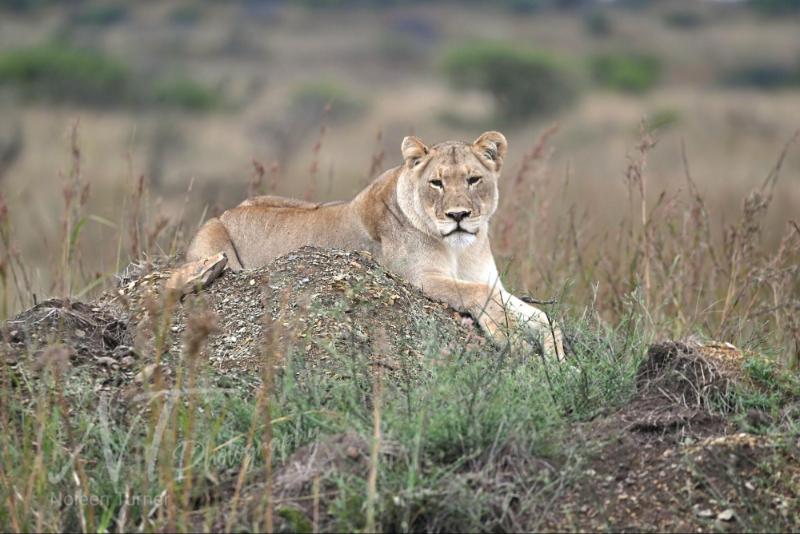
The most interesting sightings for the month have involved our Tswalu lionesses and the two dominant males. On a morning drive we were watching the cheetah brothers just after they had brought down a young zebra. One cheetah was on the kill and the other was on the fence line. Moments later, the four lions popped up on the horizon and our blood ran cold. Could they see the smaller cats? Would the cheetahs escape in time? Had the lions heard them make the kill?
The encounter unfolded in slow motion, it seemed. The cheetahs could see the big cats and were keeping a low profile. Once the lionesses saw the boys, it was clear that the faster species needed to abandon their breakfast to survive another day. Thankfully. The male lions found the free meal before anything happened to threaten the more endangered cats.
With Valentine’s Day on the calendar for the month, I have decided to write about a few mammals that show a lot of physical affection.
Our two cheetah brothers can often be seen grooming one another with long licks and face snuggles. The coalition reaffirms its bond through these displays of affection and it can make for very special photographic moments. We also had our two males spend some time wooing the female this month. She may not have reciprocated their advances, but that was only what we observed. Who knows what happened after sunset 😉
The northern pride of lions can also be seen expressing their love for each other. Whether it is playful tumbles or tender cuddles, these truly sociable cats know how to turn on the cute for guests and guides alike. The pride has been out and about more often this month and we are really loving the sightings.
We cannot allow the cats to have all the fun! Although they may not appear to show as much physical affection, the buffaloes are fiercely protective and united as a herd. They will defend their family against attack to make sure that no bovine is left behind. Even in the face of a pride of lions, the buffaloes never give up on each other.
Think I have left any out? Reach out to us and share your stories of animal love that you may have observed on Nambiti.
Before I sign off for the month of February, I have to share the sighting I loved the most! On a stormy afternoon, I was driving to a favourite drinks stop when a guest inquired about an animal in the distance. My jaw dropped and my heart leapt for joy! Sitting on a rock overlooking the valley was a beautiful leopard. We watched it for almost 15 minutes before it slipped away into the thickets. Such a special moment to share with guests. Such a memorable sighting of our most secretive big cat at Nambiti.
Culinary Innovations, Wildlife Wonders, and Natural Beauty
The first month of the new year has been phenomenal! We welcomed a familiar face back into the Umzolozolo family with the return of Raymond in the food and beverage department. He has already inspired some culinary changes to old favourites while introducing many delicious new meals on the menu. Lodge staff enjoyed some time off with their families to celebrate Christmas and catch up on rest and relaxation. In other staff news, our Head Chef, Jacob, was named as Employee of the Year for 2023. Congratulations, Jake!
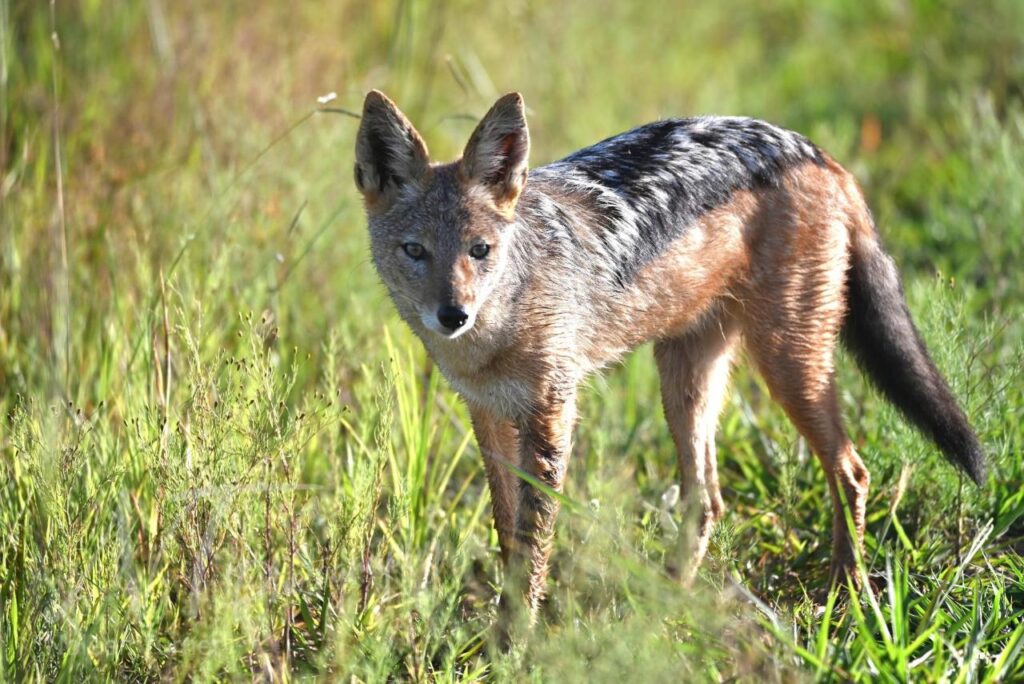
The guiding department has been busy and sightings have been awesome! One of the animals that have stolen our hearts this month has to be the Black-backed Jackals. Most of the mating pairs have had pups and the playful youngsters have been very relaxed around the vehicles. Many guests have aimed their lens in their direction and snapped some remarkable photos in the morning light.
The most entertaining animals out on game drive for me personally have to be the elephants! The newest member of the herd brings smiles and laughter to all who have the fortune of seeing him. He is full of spunk and loves to show how big and strong he is getting. One of the new Tembe elephant bulls has also been stealing the limelight. He spends a lot of time around the herd and gets great satisfaction from sauntering up to the game viewers. I was lucky enough to be in the right place at the right time to see him mating with one of the young cows in the herd. What an experience for both my guests and I. Unforgettable!
Sightings of leopards on the reserve have certainly been on the increase. In January, there were reports of at least four sightings. This is very encouraging news and something that we hope will continue into February!
The Blue Crane juveniles are growing up fast and seem to be building up their flying strength quite nicely. The colourful displays of the Yellow-crowned and Southern Red Bishops have been thoroughly entertaining. An African Fish Eagle has been seen at Woodlands Dam this month on more than a few occasions, and the Namaqua Doves have been spotted in the south.
With all the rain about, there are loads of wild flowers blooming on the reserve. The brightly coloured Red Star Zinnias, the large petals of the Bladder Hibiscus, pops of yellow on the Sweet Thorn trees and the surprise of the Pink Ladies at sunset. Butterflies, dung beetles, dragonflies and CMR beetles are zooting around during the daylight hours while moths and Flap-necked chameleons keep us entertained at sunset.
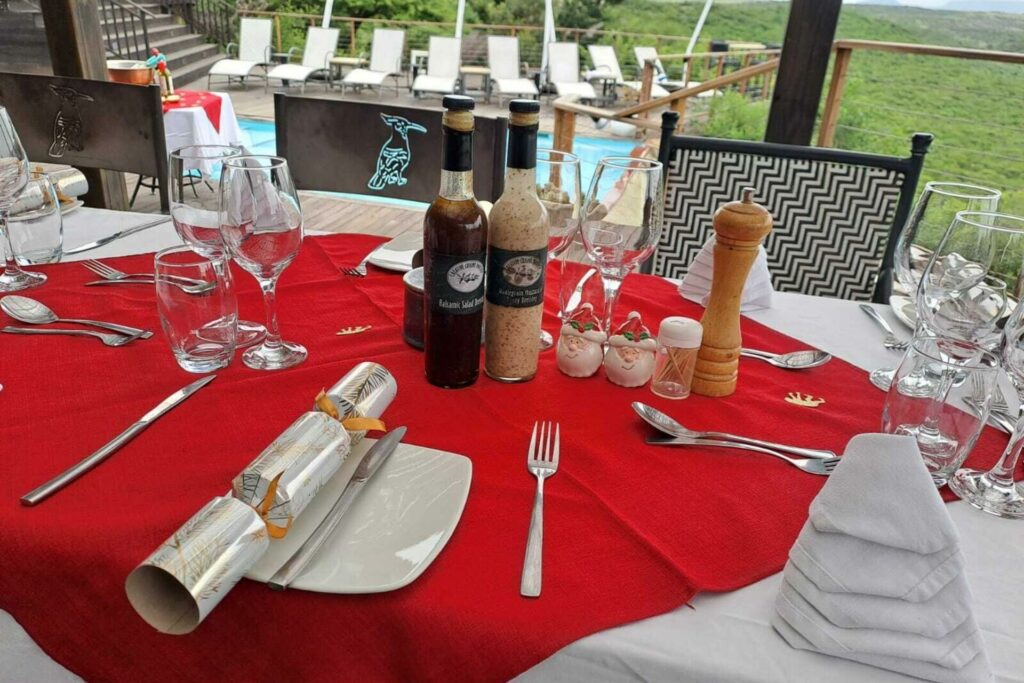
The final month of 2023 is always a festive time, even out in the wilderness. Guides accessorised with funky hats, sparkly tinsel and other Christmas decorations. The lodge was decorated with a subtle elegance plus a little extra on display for Christmas Day. The food that was prepared on the day was absolutely scrumptious, and we all felt the effect of full bellies for the rest of the afternoon. To our surprise and delight, the weather remained stable and we were able to enjoy two wonderful game drives.
In the first week of December, two new Toyota Cruisers were delivered to us. They have new upgrades, some improvements are more comfortable than practical, but they are certainly turning heads. We also received new number plates to use while out on the reserve. Look out for the fleet of Hoopoe safari vehicles cruising around Nambiti.
Sightings have also been quite special. I will highlight a few of the more memorable ones.
Field Guide Lymon captured a live hunt and kill on a morning drive in the south. One of the male lions took down a blue wildebeest calf right in front of the guests. It was both amazing and devastating to watch.
The savage kingdom of the South African savanna was on display this month. Bolts of lightning claimed a few lives, including three giraffes and a young elephant bull. The carcasses have attracted large numbers of vultures onto Nambiti. Mostly White-backed and Cape Vultures have been spotted feeding on the carrion. I was out on drive one afternoon towards the end of the month acting on some intel from another guide. As I arrived on scene, it was clear that what we were witnessing was both rare and intense. Square-lipped Rhinos were ensuring the survival of the species (if you know what I mean). They have the most protracted mating period of all mammals.
Big Birding Day was held on 2 December across South Africa. Teams register and select their location where they will identify and record birds for 24 hours. Using an app called Birdlasser, you log sightings and the data is uploaded and can be used for research and to update distribution maps. I entered a team in the 6km radius category and we placed 12th overall with 141 species on Nambiti. Some of the more impressive birds that we logged include Temminck’s Courser, Dusky Indigobird, White-bellied Bustard and Black Cuckooshrike.
The December rains have certainly kept things interesting. On one day, the northern lodges recorded 80mm of rain. There was major flooding in Ladysmith which claimed more than a few lives. Roads were wet and muddy, but the surrounding plains have become lush and the herbivores are completely satiated. I wonder what the new year will bring? Happy New Year everyone!
There is no question that a visit from one of the Big Five animals is a wish that sits on everyone’s list. In the last week of November, the two Tswalu lionesses and our two dominant male lions ventured onto the lodge grounds. They walked up the access road, through the central thicket, down to the spa and eventually settled on the walkway that leads down to the new dam. The experience was amazing, for guests and staff alike. Now that they know where our dam is, we are hoping that they will one day be spotted relaxing on the dam wall as they survey the land and its bounty.
The spring storms have rolled in over the last few days and produced some spectacular lightning shows. Guests enjoyed the ‘fireworks’ from the deck which is all the more impressive from its elevated position overlooking the rolling hills of the south.
The baby boom continues to roll through the reserve. Warthog piglets stole the hearts of many this month as they were spotted around the lodge and out on game drives. It is almost impossible not to coo at the sight of the ‘pork pops’ scurrying around behind the sows. It is a dangerous time for all of the newborns and their survival depends largely on maternal protection and their own instincts. Our Blue wildebeest cows have also started dropping their calves which has filled the air around them with the sound of their ‘gnus’. They are much easier to spot with their lighter coloration against the newly sprouting green grass, but when they stand alongside their mothers there is an element of counter-shading that helps to conceal them.
The two sub-adult male lions from the southern pride have stepped up their game and are proving that they are a force that will one day be reckoned with. They brought down a male kudu and defended the carcass from a few sneaky scavengers that were moving in to grab some scraps while they slept off their meat coma. It was a mature bull and he would likely have put up quite a fight before being silenced. While male lions are considered by many to be lazy and poor hunters, they are in fact very capable of taking down their own quarry and will do so when there are no lionesses to do the work or they are away from the pride on patrol. The kudu fell in an area close to the road which gave us excellent views but also overwhelming smells.
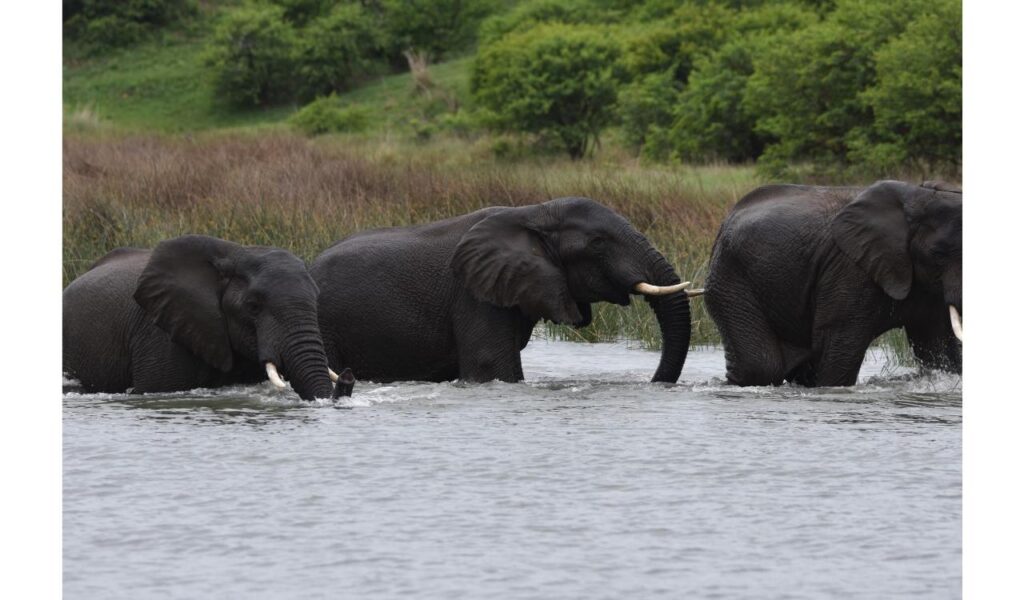
The three elephant calves are growing bigger every day and are learning to use their trunks by watching the adults and practising. We have enjoyed some awesome moments with the entire herd ‘swimming’ across the dam behind Umzolozolo Lodge, or moving around the river bed below the lodge. With temperatures soaring above 35 degrees, they have visited most of the dams in the south in the late afternoon to swim and cool down. It is evident that they look forward to it by the way that they approach the dams with energy and excitement in their step.
On the feathered side of life, we have two new Blue Crane chicks that hatched in the last week of November. The other two breeding pairs are still sitting on their eggs, but they are sure to hatch any day now! The lapwings have been particularly aggressive in mobbing bigger bird species that get too close to their eggs. We watched them fend off a hungry Secretarybird with impressive accuracy. They are not the only species to display this kind of defensive technique to protect eggs and hatchlings. The Fork-tailed Drongos have also been performing aerial acrobatics to mob Pied Crows and Common Buzzards that threaten to discover their nest sites.
Spring in the bush is a busy, savage, beautiful time. There is action around every corner. Let’s see what the Summer months have is store for us out on game drive!
If I look back on the month of October and consider the events that stand out, the memories are dominated by a freezing cold spell of weather that swooped in towards the end. There were reports of snow between Ladysmith and Newcastle, and we had single digit temperatures, hail storms and heavy rain for at least a few days. Although this is relatively unusual weather for Spring in Nambiti, it isn’t the first time that this kind of chilly weather has descended on us.
That aside, the reserve has undergone a colour transformation as the new grass shoots continue to push through the burnt soil and cover the landscape in a carpet of new. We have begun to hear more of the migratory cuckoos in the woodland areas, and I spotted a rare Greater Painted Snipe at one of the dams in the south of Nambiti. Weaver birds are busily collecting material for their woven nests, while the Pied Crows can also be seen flying around with sticks to add to their less sophisticated cup nests.
While out on safari, we have spotted zebra foals, blesbok lambs, warthog piglets and red hartebeest calves. There are many pregnant herbivores that look ready to pop, including our giraffe cows. The giraffes have been on show in many different ways this month. Large aggregations have been viewed in various places around the reserve; some bulls could be seen practising their necking skills, young calves were spotted drinking from a natural spring while others showed a different sleeping position by resting their heads on their rumps, and we have viewed them chewing on bones (osteophagia) to replenish phosphorus and calcium in their diets.
Dung beetles are all around us. Piles of dung are alive with their activity and we have to exercise extra caution while dodging the telecoprids that are rolling dung balls. We have experienced a few eruptions of termite alates, which is linked to the softening of soil and there are definitely more millipedes, butterflies and moths around at the moment. The insect activity around our new dam is also on the rise. Damselflies and dragonflies are the most noticeable culprits at this stage, but it all bodes well for habitat development.
Towards the end of the month we hosted our first Wild Series Trail Run that took place over two days. Runners were accommodated across at Elandsvlei and also at the various lodges in Nambiti. It was a successful endeavour despite inclement weather, and all of the participants appeared to enjoy the event. Next year’s edition is sure to grow in popularity!
Spring mode has been activated on Nambiti Game Reserve! Beautiful pops of colour have started appearing as wild flowers bloom, birds are diligently collecting nesting materials and donning their breeding plumage, and many a mammal is carrying the next generation for 2023.
We have identified at least two active Secretarybird nests on the reserve and the breeding pairs of Blue Crane have returned.
A few of our migratory birds have made the journey back to South Africa as well. We have heard Red-chested Cuckoos and seen a couple of Common Buzzards so far.
On two separate occasions the Umzolozolo guides shared interesting interaction between the southern pride and Hook-lipped Ungulates with guests. The first incident happened when one of the dominant male lions tried to stalk a young calf. The second incident saw a young male lion actually sink a few claws into the youngster’s rump. It was a tense situation to observe. In the end, the lions were unsuccessful. A sigh of relief could be heard from all around us.
A surprise baby elephant was born this month and the infamous BFE was spotted a bit more regularly too. He is heading towards his 60th birthday and still capturing the hearts of those who make his acquaintance.
News from the lodge is an update about the dam. We have managed to transplant a few varieties of reeds into the dam to entice smaller creatures closer, and have identified tracks of a few waders and small antelope around the dam. The two White Stinkwood trees have pushed new shoots and seem to be taking root. The area around the dam is still being cleared and grass seeds have been scattered. Now all we need is some Spring rain!
Umzolozolo Private Safari Lodge is upgrading and renovating various areas around the lodge. We have one major project on the go at the moment which promises new and exciting experiences for guests. What is this project, you ask? Well, we are building our very own dam just below the lodge! The renovations have been ongoing: we started with new paved pathways to the various suites and chalets, and continues with re-thatching of some of the roofs. With so much thatch around, experiencing winds of 37 to 41 km/hr has certainly made life tricky. The month of Au-“gust” has indeed been a rollercoaster ride.
It has been rather quiet in the southern region of the reserve, but one species that has kept us entertained is the hippo. We have four hippo calves of various ages that spend time in both Woodlands and Hippo Dam under the watchful eye of their mothers. With milder winter temperatures and colder water temperatures, these amphibious mammals have been spending more time on the banks of the dams rather than inside the water. The young hippo featured in the image below had just finished suckling and was blowing milk bubbles for the camera!
On a recent sunrise safari, I was heading back to the lodge with guests and one of them spotted a young male lion in the grasses to our right. Moments later, we noticed a lioness stalking warthogs. As if this wasn’t exciting enough, in the distance behind all of the action, we realised that if we used binoculars, we could catch a glimpse of the cheetah female that was recently introduced to Nambiti. She is getting acclimated to our piece of Africa in her own private boma. It is a delicate and important process to ensure that she settles properly before we can release her onto the reserve.
When you take a step back and glance across the hills and plains of Nambiti, it is very evident that we are still in the grips of winter! On closer inspection, you will notice that the acacia trees are sprouting new shoots, burnt areas have carpets of green patches, and sunlight hours are getting longer. Spring is just around the corner, and we cannot wait!
Morning drives in July are simply breathtaking. The air is crisp, the sunrise is a hue of pinks and oranges, and the sightings are fantastic. It really is one of the more magical times to be on safari at Nambiti Private Game Reserve.
Three sub-adult lions from the southern pride paid us a visit at the lodge this month. As I drove out of the lodge for my afternoon safari one of the lionesses was stalking a warthog on our access road. The young male was a little too eager and he ended up chasing it further into the lodge. At one point they were making their way up the road towards the Curio Shop!
The elephant herd welcomed another calf into the family this month. We had noticed them all standing together in a dense area of woodland, and we suspected that the pregnant female was preparing to give birth. Catching a glimpse of the newcomer is not an easy task as they are very protective of the little one, but it is every bit worth the wait when you do get to see it.
In other elephant news, we said goodbye to two young bulls that were translocated out of Nambiti. By removing two of our bull elephants, we were able to make space for two new bulls from Tembe Elephant Park. Reserve management had to consider the genetic diversity within our herd, and it was time to mix things up. I was fortunate enough to be there when the truck arrived to offload the new pachyderms, it was an auspicious occasion that I will always remember.
While I would consider the morning drives to be more appealing in the winter months, there are a few good reasons to be out after dark. One species in particular has been creating quite a stir, the aardvark. This elusive, nocturnal mammal has been a highlight for many guests and guides alike. They feed mainly on termites and ants, and their preferred habitat is influenced largely by the soil in which they build their burrows. We have discovered one individual that seems quite relaxed around the vehicles!
With the second half of the year well on its way, we are all looking forward to new guests and return guests visiting us to create their own safari memories.
🍪 We use cookies to improve your experience and for analytics. By continuing, you agree to our Privacy Policy in compliance with POPIA. Privacy Policy.